Is AI the New Digital Camera?
There is a particular type of man at every wedding. He's usually an uncle, occasionally the groom's mate Gaz, and he has a camera round his neck that cost more than the cake. Somewhere between the vows and the soup he'll wander over, peer at the back of my camera, peer at me, and say it.
"Wow. You must have a really good camera."
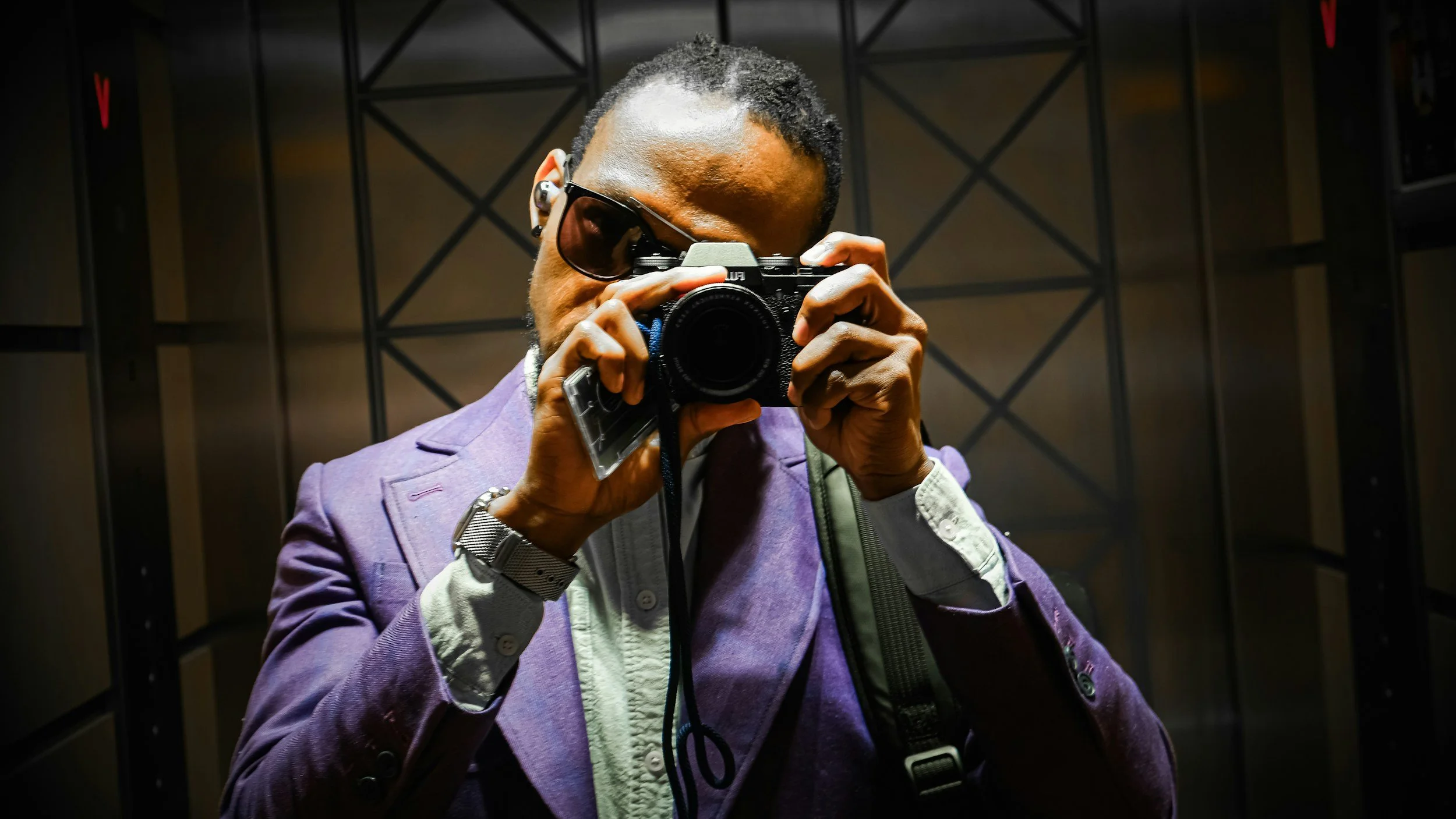
I did, as it goes. Several. Not one of them ever got itself out of the bag, or talked a terrified bride down off the ceiling, or worked out what to do when the whole day was forty minutes behind, the mother of the bride was weeping into a napkin and a toddler had removed his trousers during the speeches. Lazy bastards, the lot of them.
Gaz meant it as a compliment. That was the annoying part.
It's 2026 now and Gaz has a new line. He's started a business, possibly something to do with protein balls, and he wants to know why anyone would pay a person to make content when ChatGPT will do it for nothing.
And I couldn't help but wonder…
Is “I can just do that with AI” the new “you must have a really good camera”?
The birth of Weekend Canon Man
Kodak, bless them, invented the digital camera themselves in 1975. Steven Sasson's prototype was the size of a toaster, took 100 x 100 pixel black and white pictures and needed 23 seconds to write each one onto cassette tape. Annie Leibovitz did not lose sleep.
By 1991 Kodak had a digital system for photojournalists, and by 1995 a point-and-shoot for the rest of us. After that it went the way a hen do goes after the second bottle of prosecco, and nobody was counting any more. No film to buy, no processing, no lying awake wondering whether that frame deserved one of your last six exposures. Take another. Delete the rubbish.
I launched my photography business in 2008, which in hindsight was a bit like opening a video shop the week Netflix arrived. By 2010 the world was buying 121.5 million digital cameras a year, and a new species had emerged. Let's call him Weekend Canon Man. He'd read every review going and owned a lens the length of my forearm. He genuinely believed professional photography was a shopping problem, and that if he spent enough in Jessops, the pictures would follow.
Academics clocked it at the time, writing that professional-looking kit didn't come bundled with the understanding behind the picture. Owning a saucepan has never once made anybody a chef. Weekend Canon Man's camera could expose a photo beautifully. It just had absolutely no idea which photo mattered.
Then the camera ran off with a younger model
The phone. Obviously.
Camera shipments have fallen by about 94% since that 2010 peak, and compacts got it worst: almost 109 million shipped in 2010, and 1.7 million in 2023. The camera got absorbed into the phone, like a friend who moves in with a new boyfriend and you never see her on her own again.
These days around 92.5% of photos are taken on phones, and we took an estimated 2.1 trillion of them in 2025. That's roughly 61,400 every second, most of them of a flat white or somebody's chin from below.
Fair enough, mostly. More people get to tell their own stories now, and I'd never want to go back to a world where only blokes with expensive kit decided what was worth remembering. But two trillion photos a year is an awful lot of photos nobody ever looks at again.
And then, out of nowhere, film
Just when film had been read its last rites, people started buying it again.
Young people, mostly. Research published this year estimated that 35% of the world's 42 million film camera users in 2025 were aged between 18 and 30, people who have never once queued at Boots to collect their prints. Searches for analogue photography went up 41% the year before. When Ilford surveyed more than 14,000 film photographers across 110 countries, 71% said they'd shot more film than the previous year.
The factories can barely keep up. Kodak moved its film lines from a single shift to round the clock. Fujifilm sold its 100 millionth Instax in 2025. And Harman, who make Ilford film just over the border in Mobberley, Cheshire, have made their biggest investment since the 1990s, partly because Phoenix, the colour film they make entirely in-house, sold so well.
Look at what these people are choosing. You get 36 goes and can't see a single one. You post the roll off, you wait a week and you pay for the privilege, only to discover you cut your best mate's head off at her own birthday. It's the man who doesn't text back for three days, and a whole generation has decided that's exactly what they fancy.
Fujifilm reckons part of the appeal is getting away from likes and comments and actually being there. I think it's simpler and slightly sadder than that. When every picture is perfect and instant, none of them feel like they belong to you. A bit of grain and a light leak at least prove a human was holding the thing. We spent billions engineering imperfection out of photography, and now we buy presets to put it back in.
Which brings us back to Gaz
AI has done to content exactly what digital did to photography. Nearly half of UK small businesses now use AI tools, more than double a year earlier, and making content is the main thing they use them for. Among UK businesses using AI in their marketing, 83% are using the very same tool. So when Gaz says he can do it himself, he's right. Course he can. Weekend Canon Man could take a photo, too.
Photographers have already lived through the next bit. The kit stopped being the reason anyone hired us. The good ones survived on taste, and on knowing which twelve seconds of a wedding actually mattered. The ones whose whole pitch was "I own a better camera than you" are probably selling insurance now.
I use AI every day, and I'd rather walk to Chester in heels than go back to writing captions without it. But I find it very funny that everyone is rushing to make content that looks exactly like everyone else's, at the precise moment a generation of 22-year-olds is paying good money to not know whether their photos came out.
The camera never knew where to point itself. I'm not convinced the chatbot does either, and I'm fairly sure Gaz doesn't.
Sources
PetaPixel: photos taken in 2025 expected to exceed two trillion
Kodak film production and the analogue revival (RedShark News)
From the original draft: Kodak, Digital Trends, Sage Journals, Statista (CIPA data), Fortune, ILFORD Photo, Fujifilm, Digital Camera World.