
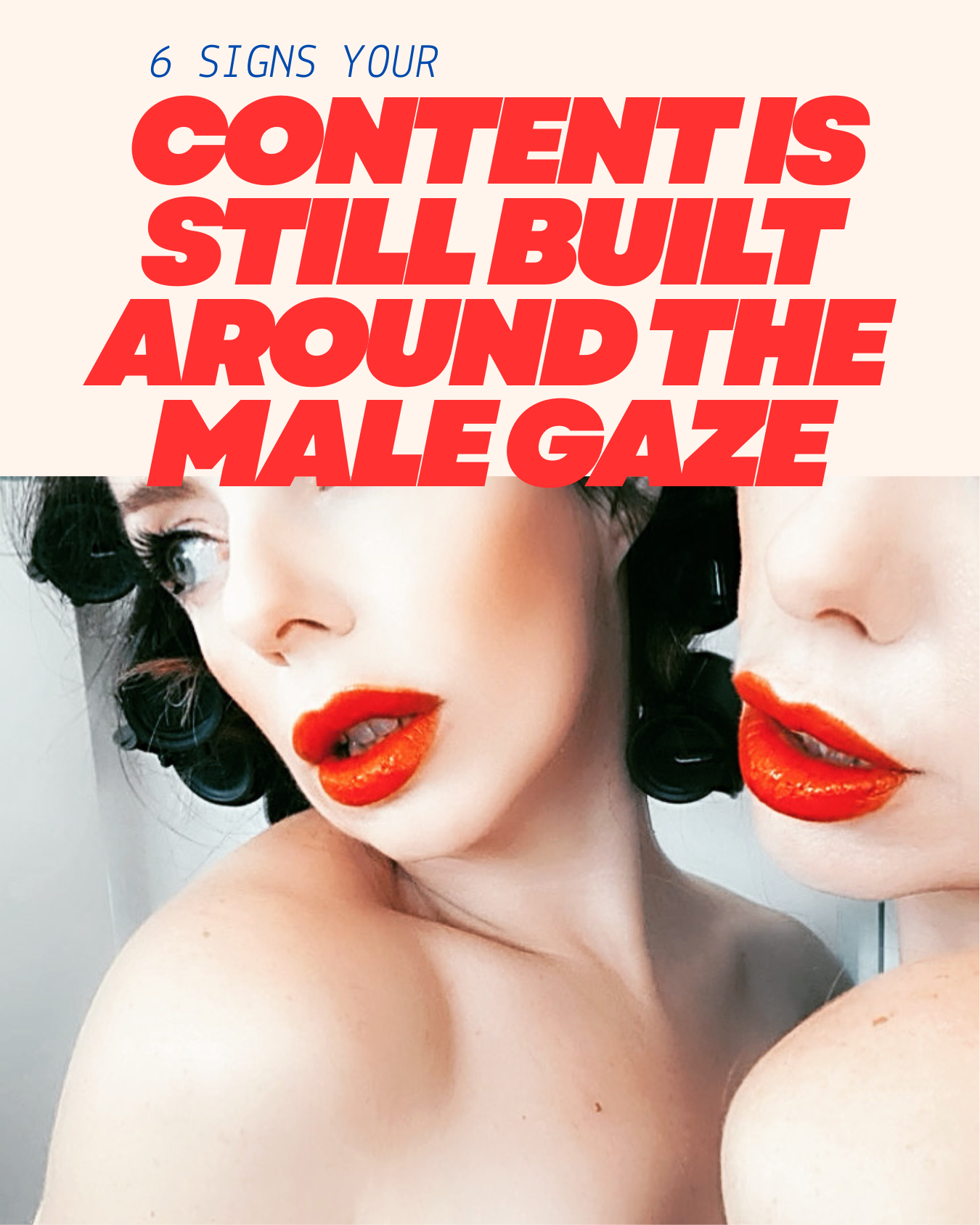
7 Signs Your Content Is Still Built Around the Male Gaze
After 20+ years behind the camera, Sarah from Red Shoe explores how the male gaze still shapes modern content, and how female-gaze-led content can help women-led brands be seen with more truth, depth and agency.
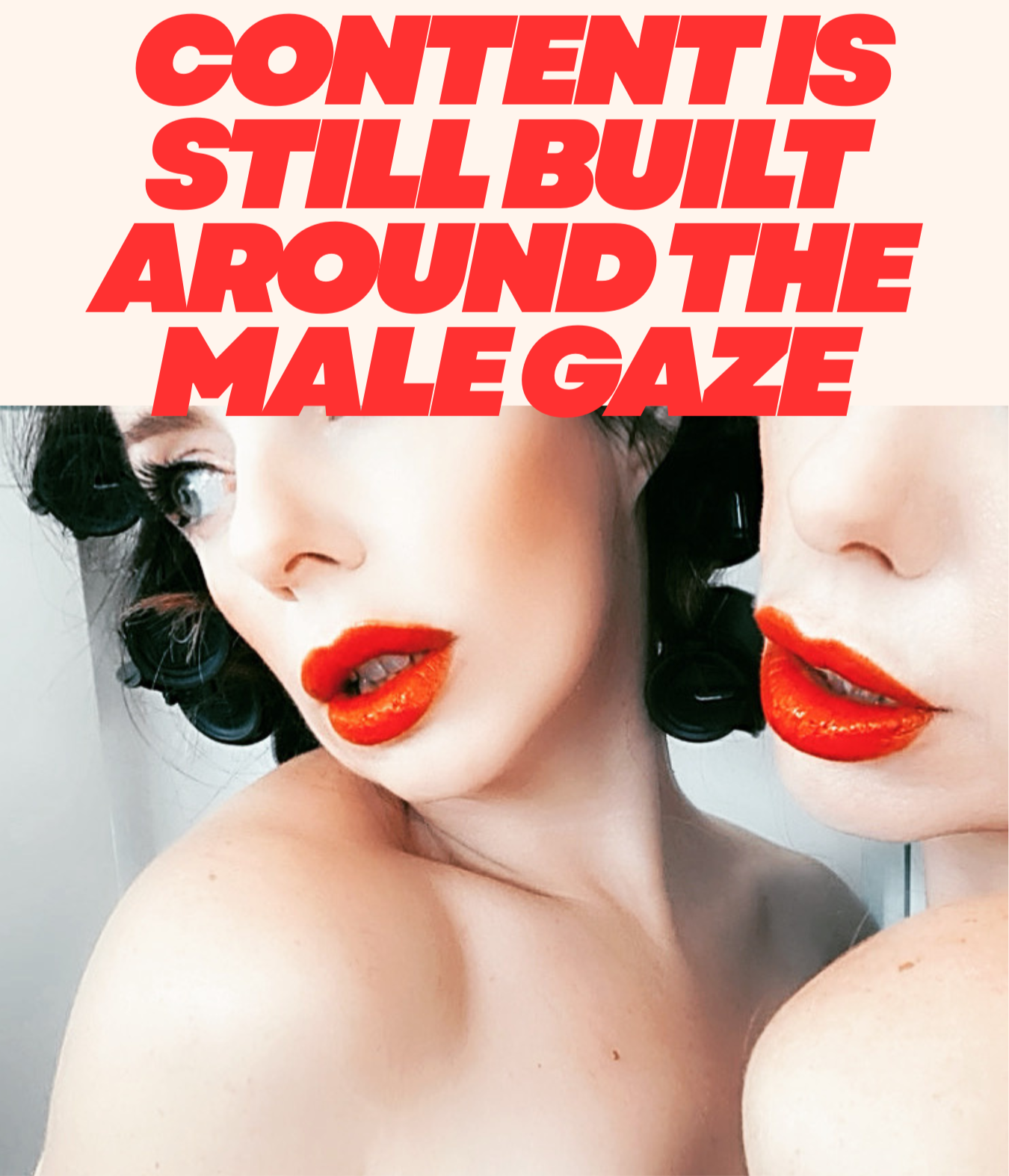
The male gaze did not disappear.
It got better lighting, a trending sound, a ring light, a softer font and a content strategy.
It moved from cinema into advertising. From advertising into social media. From glossy magazine spreads into Instagram reels, personal brand shoots, wellness content, founder videos, fashion campaigns, beauty tutorials and lifestyle branding.
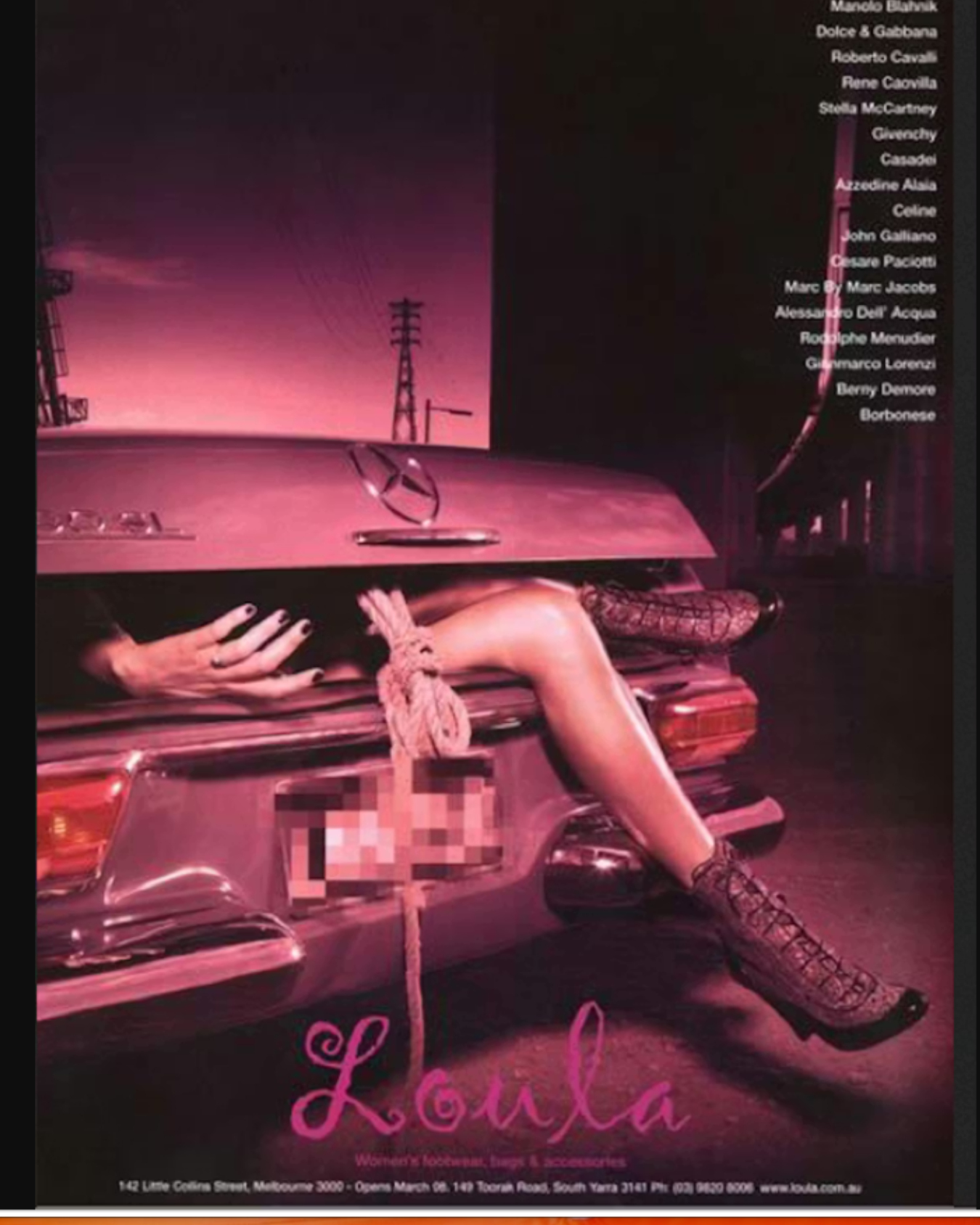
It no longer always looks obvious. It does not always arrive dressed as a perfume advert with a woman draped over a car. Sometimes it arrives as “empowerment”. Sometimes it arrives as “confidence”. Sometimes it arrives as “just showing up online”.
But underneath the soft lighting and inspirational captions, the same old question is often still being asked:
Is this woman desirable enough to look at?
That is where I think content creators, brands and women-led businesses need to pause.
Because content is not neutral. Images are not neutral. The camera is not neutral.
Every frame makes a decision. Every edit makes a decision. Every pose, caption, crop, sound, filter, transition and visual trend tells the viewer how to understand the person in front of them.
After more than 20 years working with images, first as a photographer and now as a content creator, I have learned that the most powerful content is not always the most polished. It is the content that understands the difference between being looked at and being seen.
And that difference is everything.
What is the male gaze?
The term “male gaze” is most commonly linked to film theorist Laura Mulvey, who wrote about how mainstream cinema often positioned women as objects of visual pleasure, seen through the viewpoint of a heterosexual male spectator. Her 1975 essay Visual Pleasure and Narrative Cinema became one of the key reference points for understanding how women are framed, watched, desired and objectified in visual culture.
In simpler terms, the male gaze is what happens when women are represented primarily as something to be looked at, consumed or desired, rather than as full subjects with agency, complexity and interior life.
And this matters because images shape how we understand ourselves.
Objectification theory, developed by Barbara Fredrickson and Tomi-Ann Roberts, explores how girls and women can learn to internalise an observer’s view of their own bodies. In other words, women can begin to experience themselves from the outside in, constantly monitoring how they appear rather than simply living inside their own bodies.
That idea is painfully relevant to social media.
Because so much of modern content asks women to watch themselves being watched.
Is my face right?
Is my body right?
Do I look confident enough?
Do I look too confident?
Do I look attractive?
Do I look professional?
Do I look approachable?
Do I look young enough?
Do I look effortless, but not lazy?
Do I look polished, but not fake?
Do I look visible, but not too visible?
It is exhausting.
And for women-led brands, female founders, creatives and business owners, this creates a real tension. You need to be visible. You need content. You need images, reels, video, personal brand storytelling and social proof.
But you should not have to perform for the same visual rules that have spent decades reducing women to decoration.
That is where female-gaze-led content comes in.
From photography to content creation
My background is photography. For more than 20 years, I worked behind the camera, photographing women through many different stages of life: confidence, motherhood, illness, ageing, grief, reinvention, business ownership, identity shifts and moments where they did not quite recognise themselves anymore.
That experience taught me something I now carry into content creation:
People can feel the power dynamic in an image.
They may not have the theory. They may not use words like objectification, gaze, representation or visual culture. But they can feel when an image is extracting something from someone.
They can feel when a woman has been arranged for approval.
They can feel when beauty is doing more work than story.
They can feel when vulnerability has been turned into an aesthetic.
They can feel when a brand says “empowerment” but the visuals still say “please find me desirable”.
That was part of the thinking behind my own project, Come As You Are.
The project was built around authentic portraiture, female empowerment and body positivity, but not in a glossy, slogan-on-a-tote-bag way. The women who took part spoke about confidence, illness, motherhood, body changes, identity, self-doubt and the fear of being seen. Some talked about wanting to find themselves again. Some talked about feeling most comfortable not being visible at all.
That project changed how I thought about image-making.
It made me much less interested in simply making women look “good”.
Because “good” can be a trap.
Good according to who?
Good for what?
Good because she looks like herself, or good because she has been edited into something easier to approve of?
That question now sits at the centre of my work as a content creator.
The male gaze in modern content
The male gaze in content does not always look sexual.
Sometimes it looks like over-polishing.
Sometimes it looks like making a woman appear smaller, softer, quieter or more palatable.
Sometimes it looks like turning her into a lifestyle accessory for her own brand.
Sometimes it looks like using her body, face, vulnerability or femininity as the hook, while her actual knowledge, story or authority becomes secondary.
And sometimes, annoyingly, it performs as empowerment.
That is the slippery bit.
A woman can be wearing what she wants, saying what she wants, selling what she wants and still be framed through visual rules that make her consumable first and human second.
So when I talk about the female gaze in content creation, I am not talking about removing beauty. I am not talking about making everything soft, muted, natural and serious. I am not saying women cannot be glamorous, sexy, funny, stylish, bold or commercial.
Beauty is not the problem.
Selling is not the problem.
Visibility is not the problem.
The problem is content that asks women to become objects first and people second.
7 signs your content is still built around the male gaze
1. Your content is designed to make women look consumable
This is the big one.
If the main purpose of the image is to make the woman desirable, rather than understood, the content is probably still working through the male gaze.
That does not mean women cannot look beautiful. Of course they can.
But there is a difference between beauty as expression and beauty as reduction.
Female-gaze-led content allows beauty to exist without making it the woman’s rent payment for being visible.
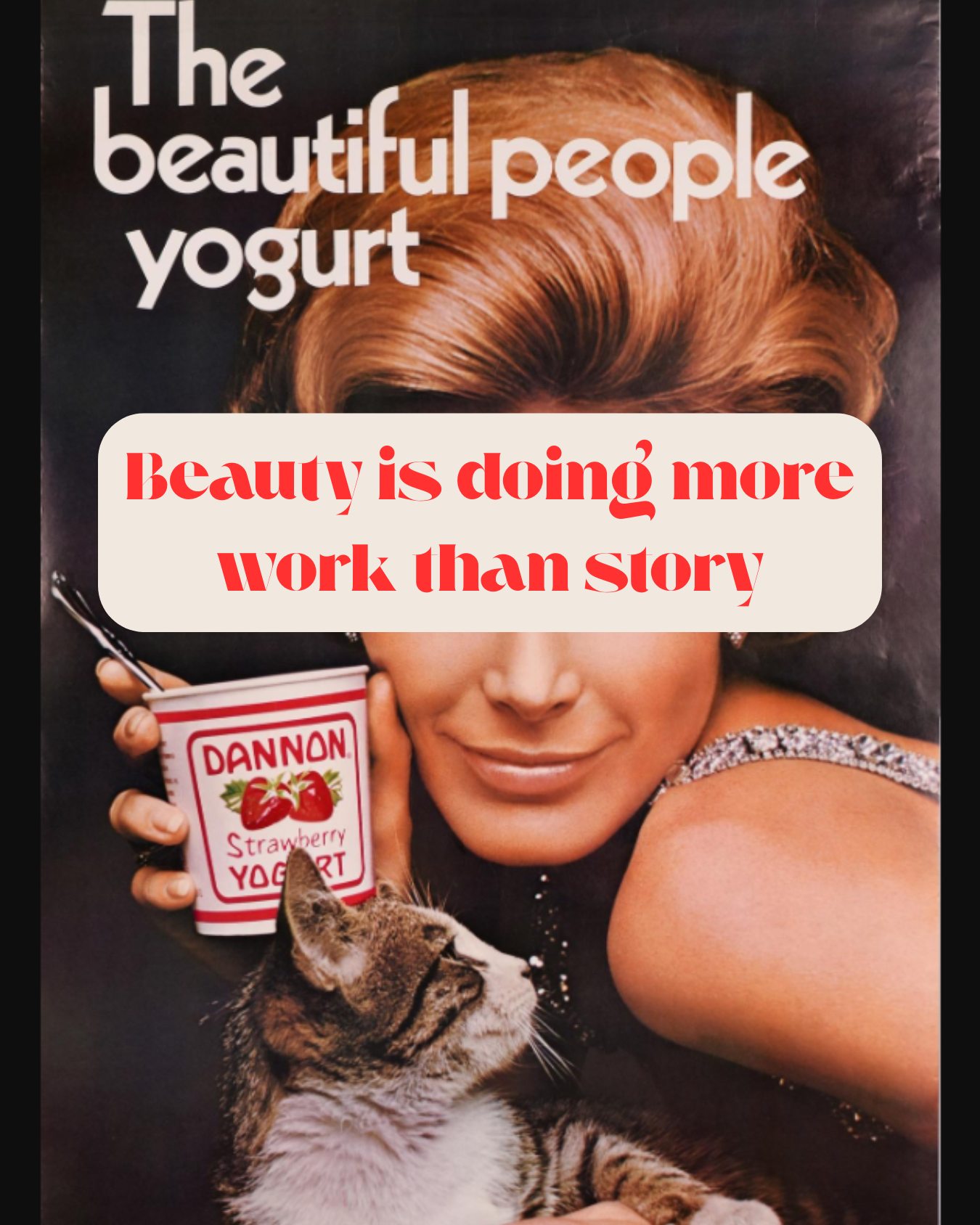
2. Beauty is doing more work than story
A polished image can still be empty.
If the lighting, outfit, styling, body, face, location and edit are all doing the heavy lifting, but we do not understand who the woman is, what she believes, what she does, what she knows or why she matters, then the content has become surface-led.
This is especially relevant for personal brands.
Your audience does not just need to know what you look like.
They need to understand your thinking.
They need to feel your values.
They need to know what you stand for.
Otherwise, you are just feeding the algorithm another pretty shell.
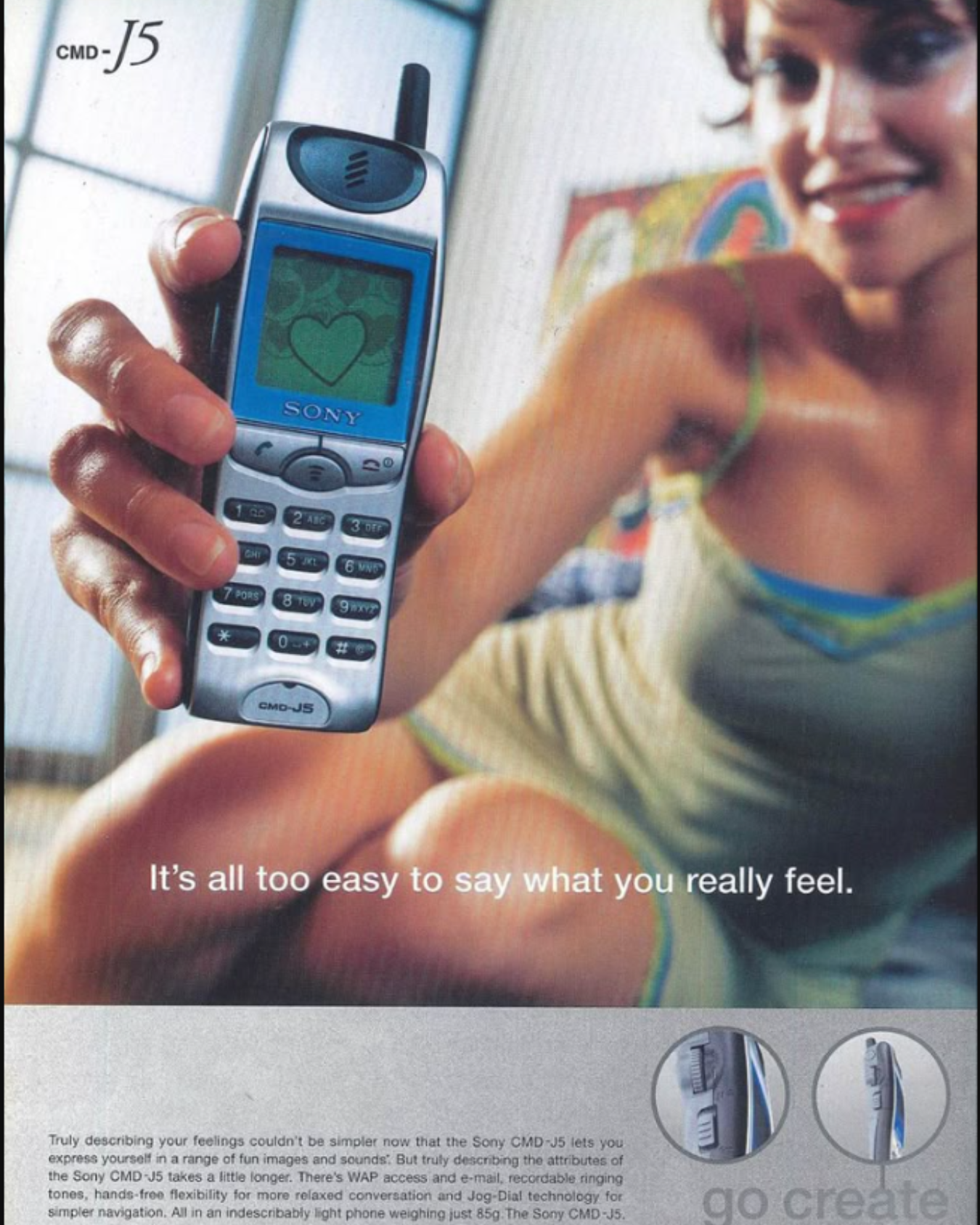
3. The woman is the decoration, not the subject
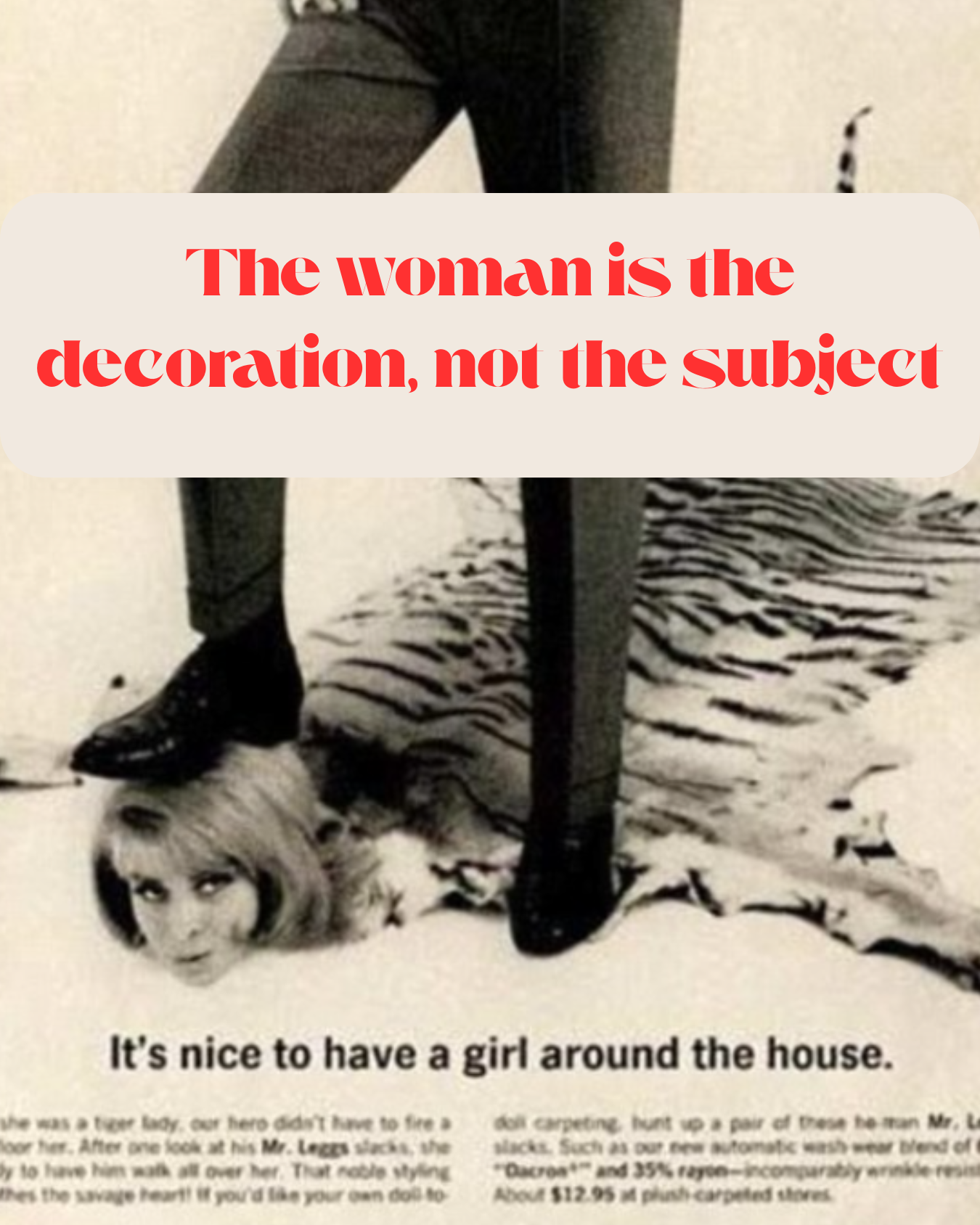
This happens constantly in brand content.
A woman appears in the frame, but she is not really the point. She is there to soften the brand, beautify the product, create aspiration or add lifestyle appeal.
She becomes a prop.
Female-gaze-led content asks different questions.
What is her role in this story?
What is her agency?
What does she know?
What is she choosing?
What is the viewer being invited to understand about her?
If the woman could be replaced by a vase, a candle or a beige linen curtain and the content would still make sense, we have a problem.

4. The camera lingers but does not listen
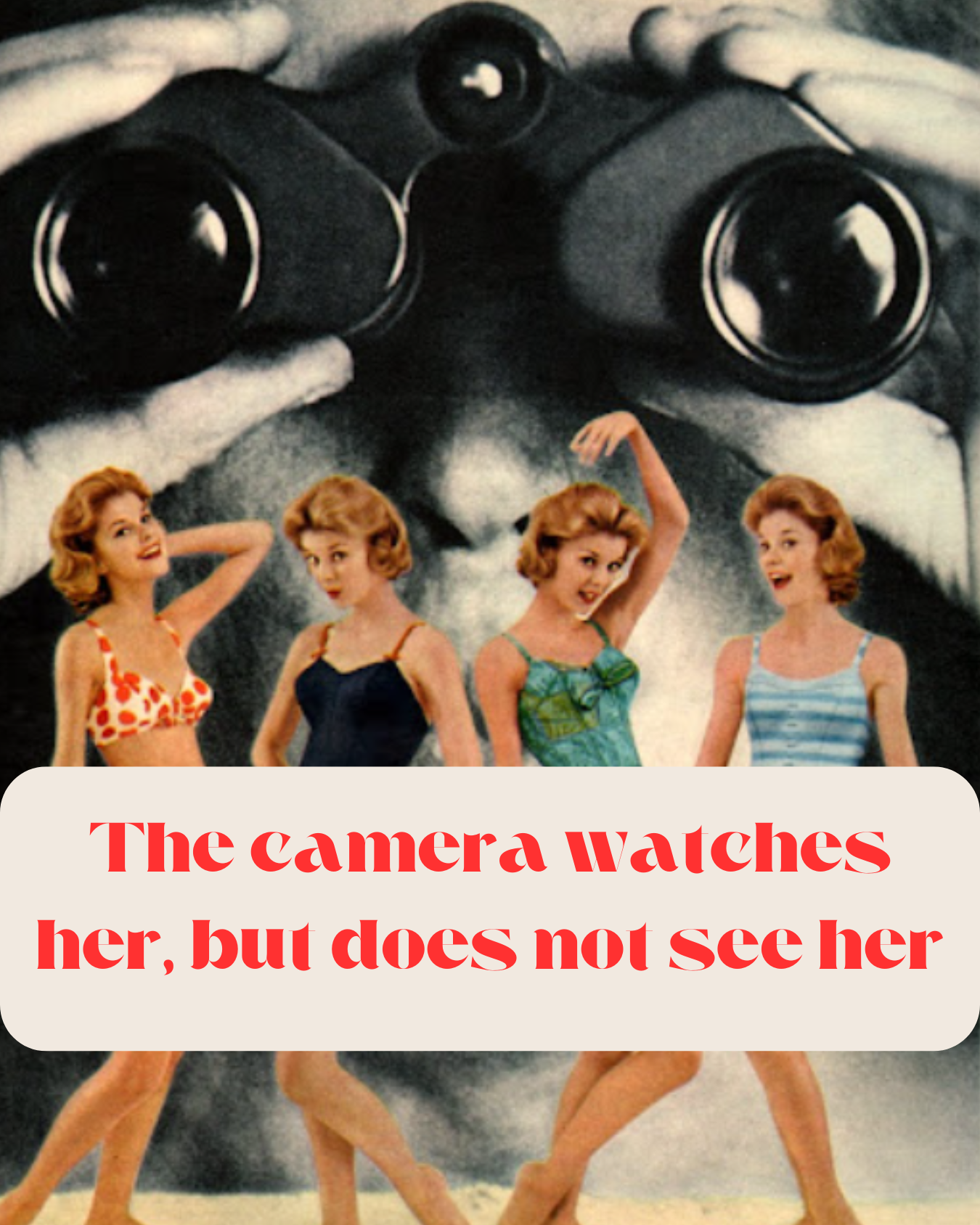
This is one of the clearest differences between objectifying content and human-centred content.
The camera can look without listening.
It can move across someone’s body, face, clothes, hands or environment and still tell us nothing about them.
Listening with a camera means the content has been built with context. It considers the person’s comfort, story, personality, body language, boundaries and message.
This is where my photography background deeply affects how I create content.
Before I think about the shot, I think about the person.
What are they trying to say?
Where do they feel awkward?
What are they hiding behind?
What feels false?
What feels alive?
What needs to be left alone?
Good content direction is not just telling someone where to stand.
It is knowing when the visual idea is starting to overpower the human being inside it.
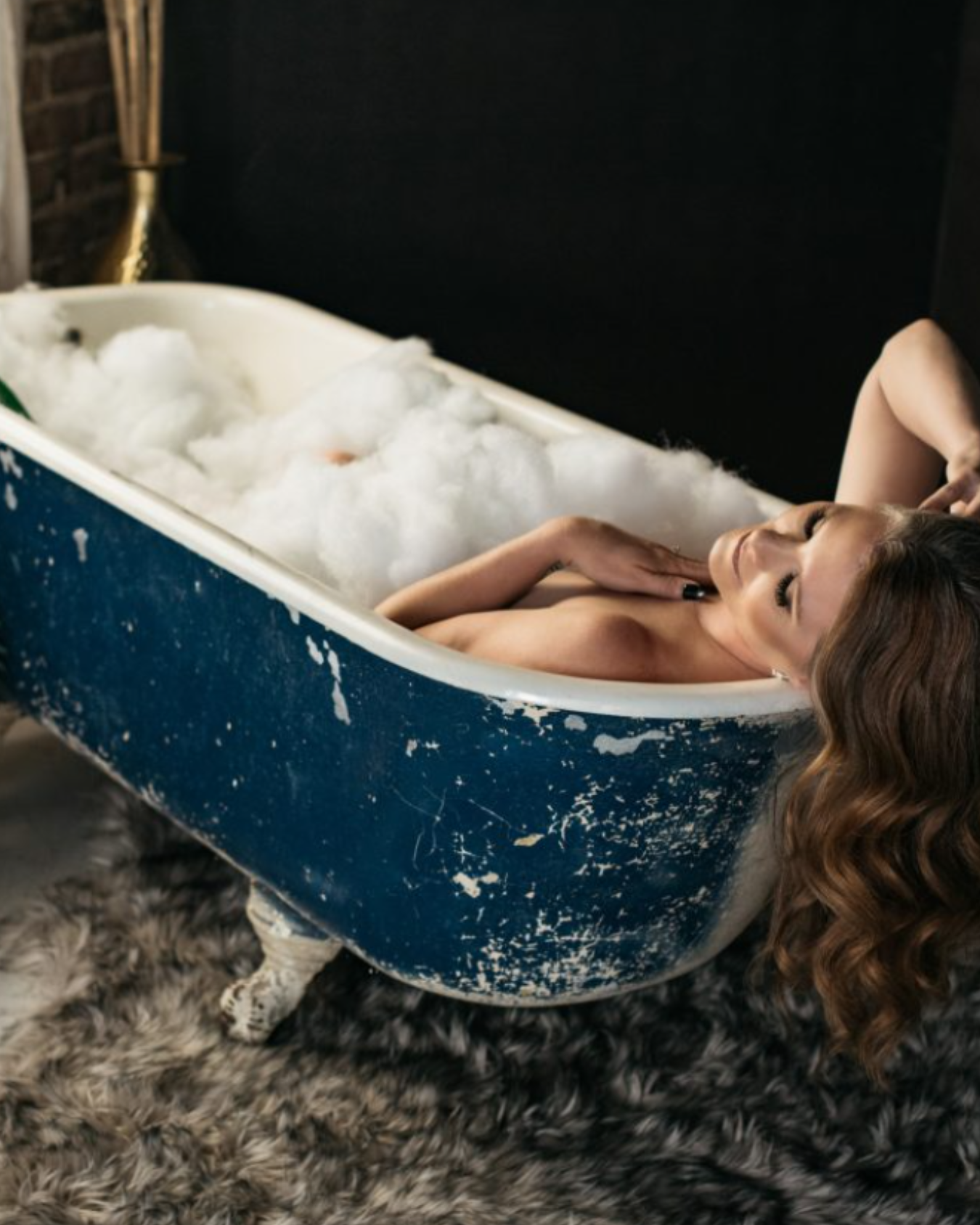
5. Vulnerability is used as an aesthetic
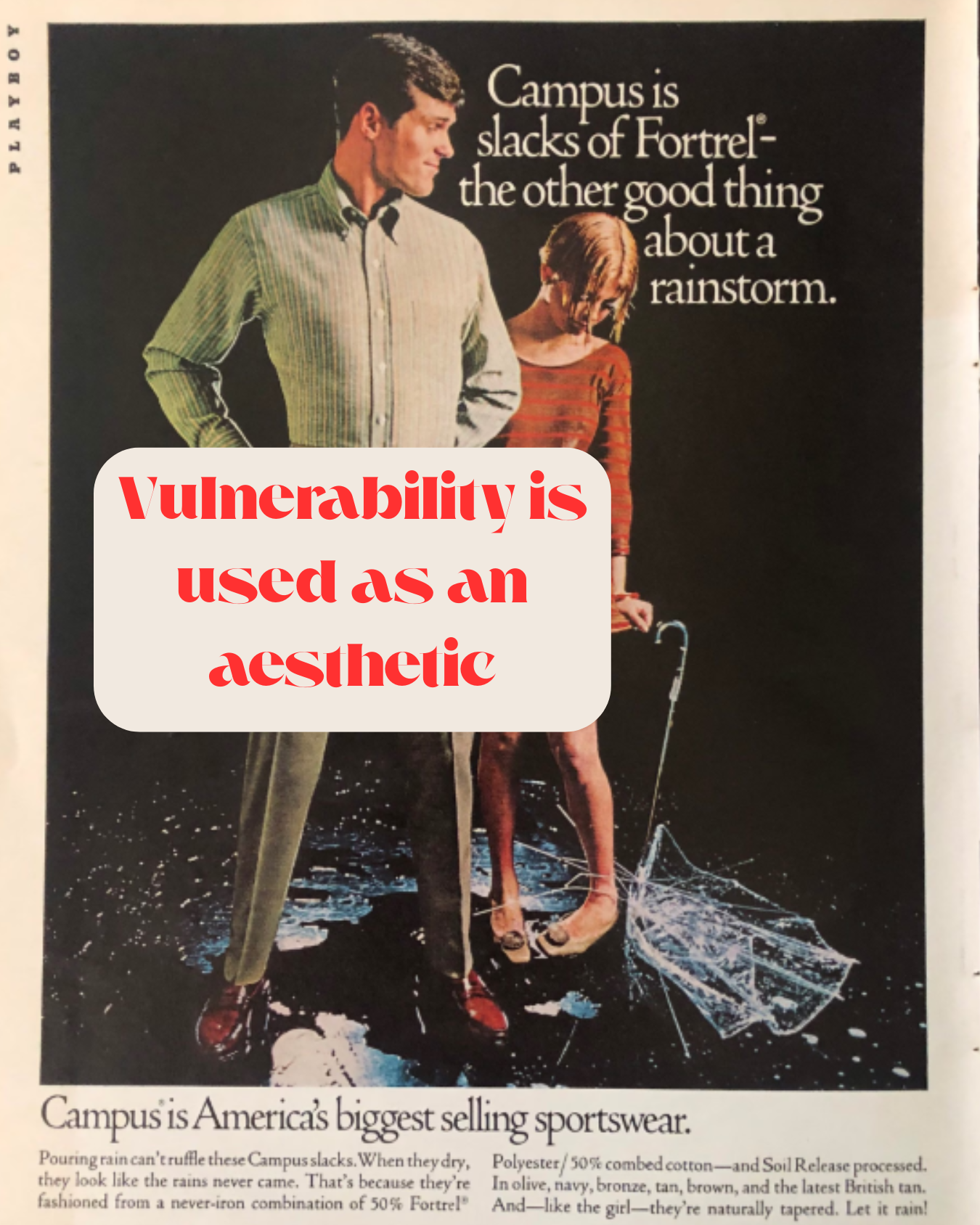
We need to talk about this one.
Because online content has learned how to package vulnerability beautifully.
Crying selfies. Slow-motion staring out of windows. Messy-but-curated desks. Trauma turned into carousel hooks. Healing turned into a brand palette.
Now, some of this can be real. I am not dismissing honest storytelling.
But vulnerability becomes problematic when it is used mainly to create intimacy, engagement or emotional click-through, without care for the person behind it.
Female-gaze-led content does not use vulnerability as bait.
It gives people authorship over their own story.
There is a difference between sharing something true and being visually arranged as wounded for the sake of relatability.
6. “Empowerment” still depends on being desirable
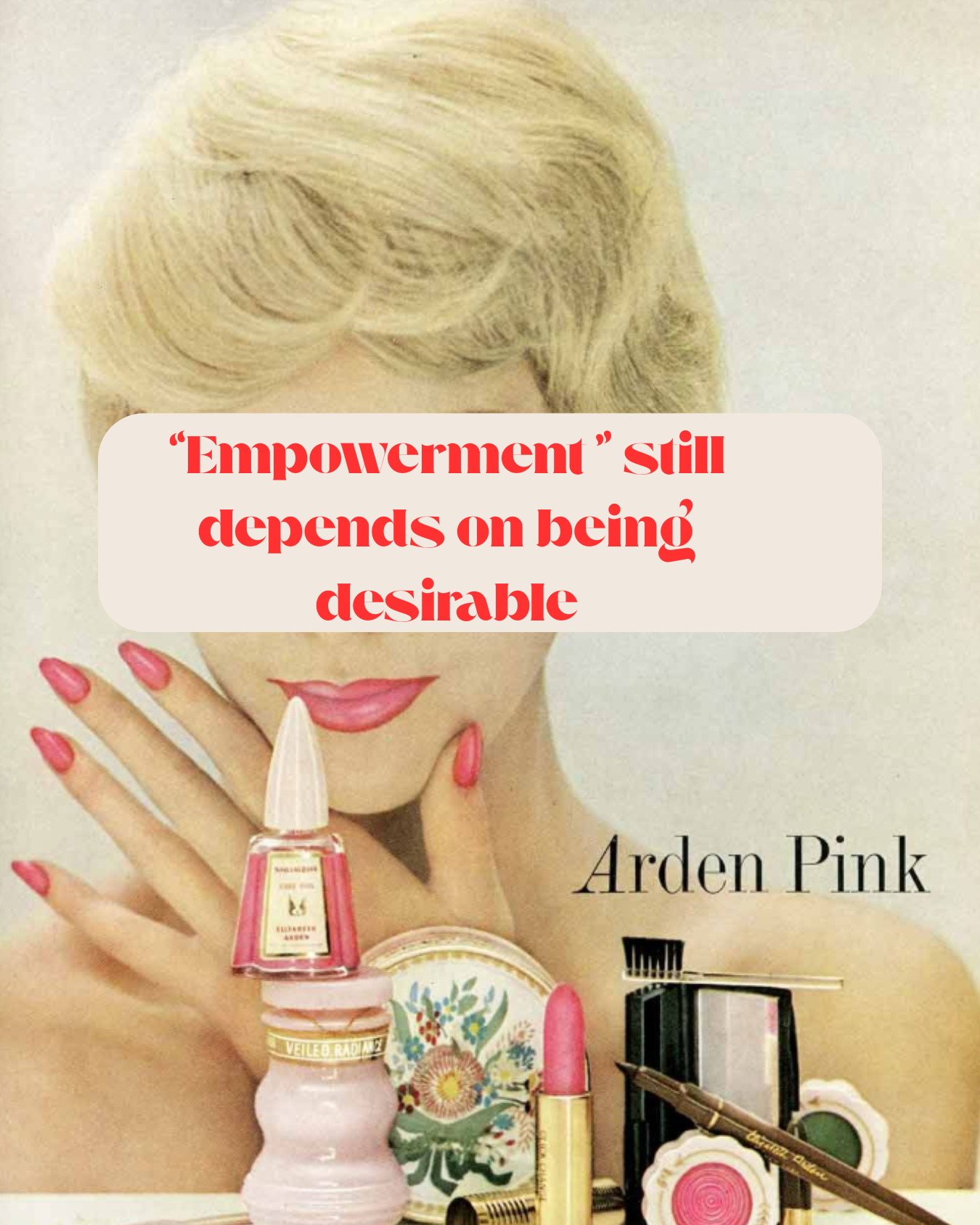
This is where a lot of brand content gets itself in a twist.
It says “be yourself”, but only shows a very narrow version of what that self is allowed to look like.
Young. Thin. Smooth. Glowing. Stylish. Unbothered. Sexually legible, but not too much. Confident, but not threatening. Successful, but still likeable.
That is not liberation.
That is just a prettier cage.
Female-gaze-led content makes room for women to be more than desirable.
Tired. Brilliant. Awkward. Funny. Angry. Ageing. Soft. Direct. Complicated. Practical. Grieving. Powerful. Uncertain. Capable. Unfinished.
Women do not need to be visually perfect before they are allowed to be visible.

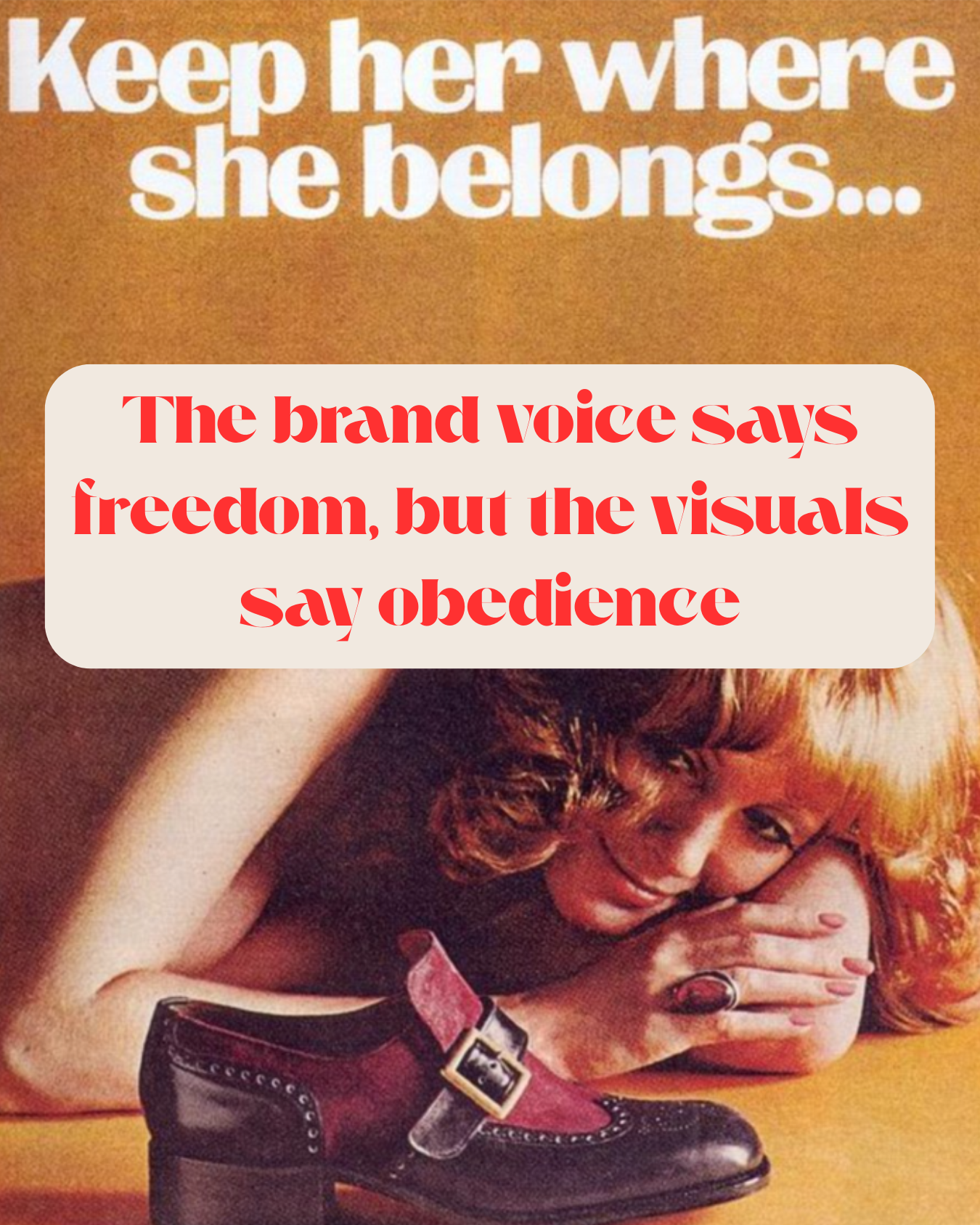
7. The brand voice says freedom, but the visuals say obedience
This is the one I want more brands to pay attention to.
You can write captions about confidence, freedom, authenticity and empowerment, but if your visuals are still built on perfection, performance and approval, your audience will feel the contradiction.
The words say: be yourself.
The visuals say: but make sure it is the acceptable version.
That gap matters.
Because audiences are more visually literate than brands give them credit for. They may not always be able to explain what feels off, but they can sense when a brand’s message and imagery are not telling the same truth.
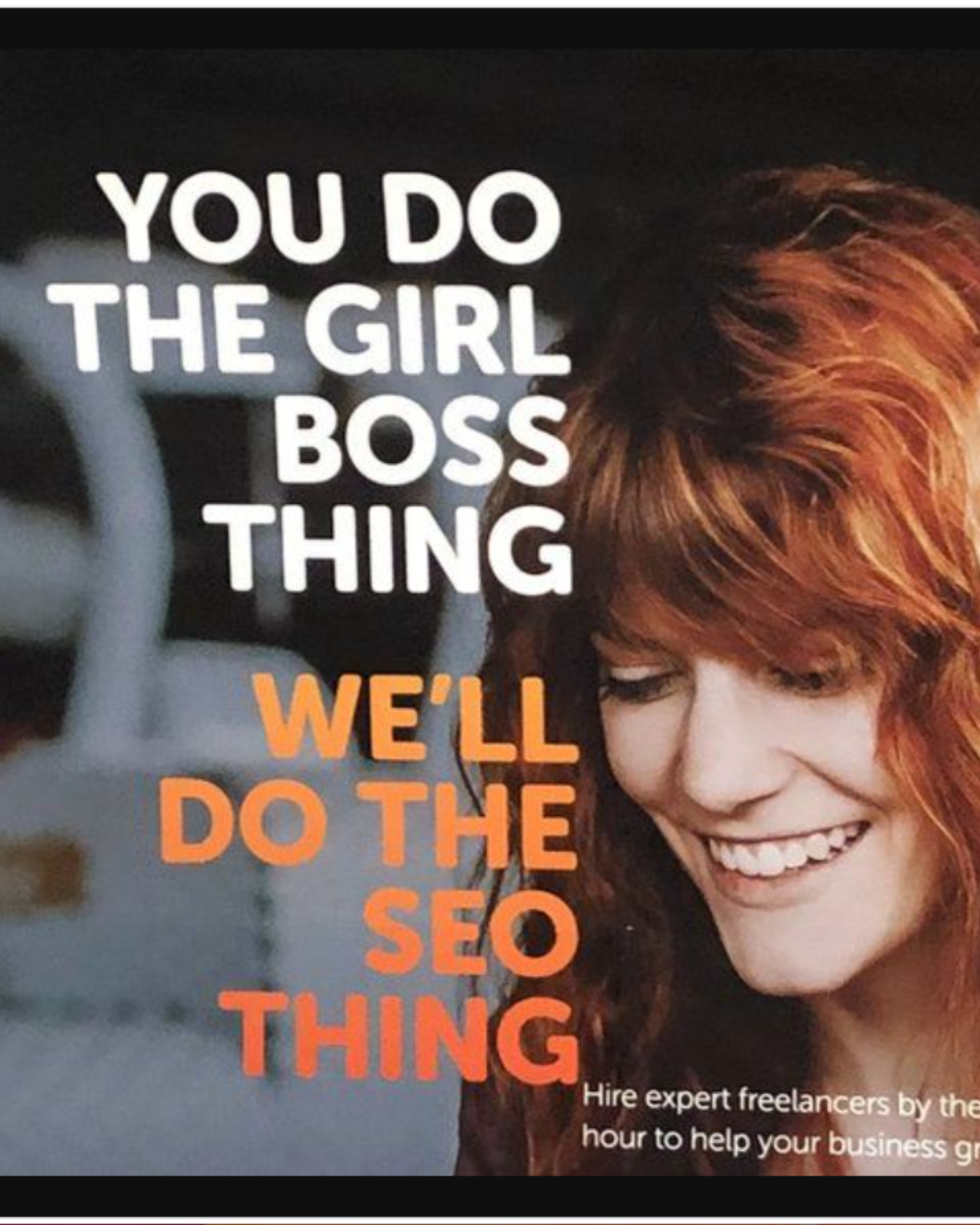
So what does female-gaze-led content look like?
For me, female-gaze-led content is not an aesthetic.
It is not just soft lighting, natural textures, handwritten fonts and women walking through fields in linen trousers.
It is a method.
It is a way of creating content that asks:
Who has agency here?
Who is this image serving?
Is this person being flattened or revealed?
Is beauty being used as expression or as control?
Does this content give the subject authorship?
Are we selling by creating insecurity, or by building connection and trust?
Does the visual story match the values of the brand?
For women-led brands, this matters commercially too.
Because content that feels more truthful tends to build stronger trust.
It makes the brand feel more human, more specific and more emotionally intelligent. It moves beyond “look at me” and into “understand what I stand for”.
That is where content becomes more than output.
It becomes positioning.
The Red Shoe lens
My work now sits at the intersection of photography, content creation, visual storytelling and female representation.
I still use everything photography taught me: light, composition, body language, expression, atmosphere, editing, visual rhythm and emotional timing.
But I now use those skills in a wider content context.
Reels. Campaigns. Personal brand content. Founder-led storytelling. Social media visuals. Brand messaging. Creative direction. Content strategy.
The goal is not simply to make content look nice.
The goal is to create content that helps women-led brands become visible without performing for the old visual rules.
Content that can sell without objectifying.
Content that can be beautiful without becoming hollow.
Content that can be strategic without becoming manipulative.
Content that lets women be seen, not just looked at.
Because the camera is never neutral.
And neither is content.
The question is not just: does this look good?
The better question is:
What version of this woman, this brand, this story, are we asking the audience to believe?
That is the work.
That is the shift.
That is the Red Shoe lens.
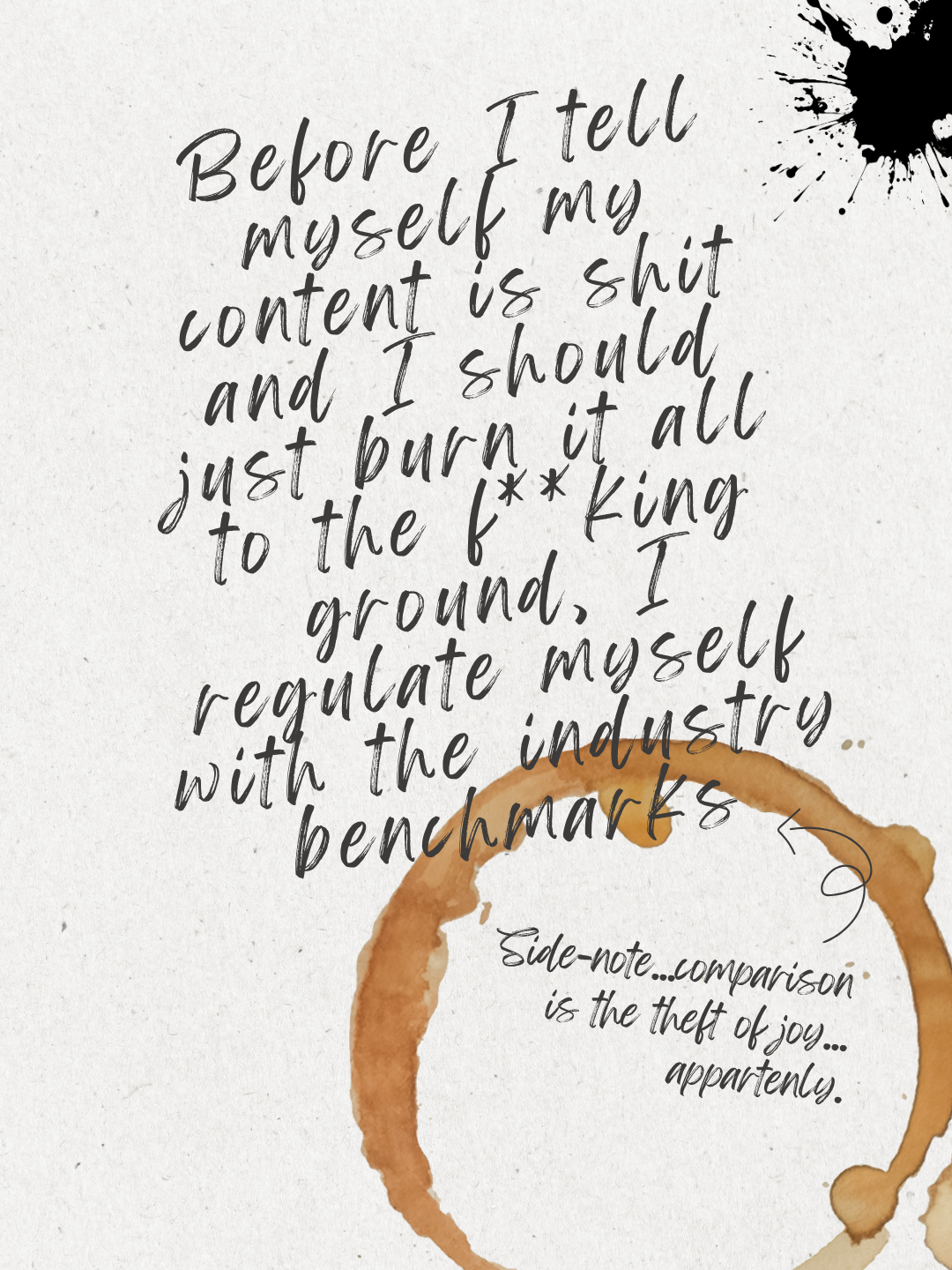
When Your Content Flops: Stop Comparing Your Numbers and Start Reading Them
The Real Issue With "My Content Flopped"
When we say our content flopped, what we usually mean is: someone else's got more likes.
But here's what we're not asking:
More likes than what?
Compared to whom?
Against what baseline?
By Sarah Sadler | Content Strategist & Photographer | Chester
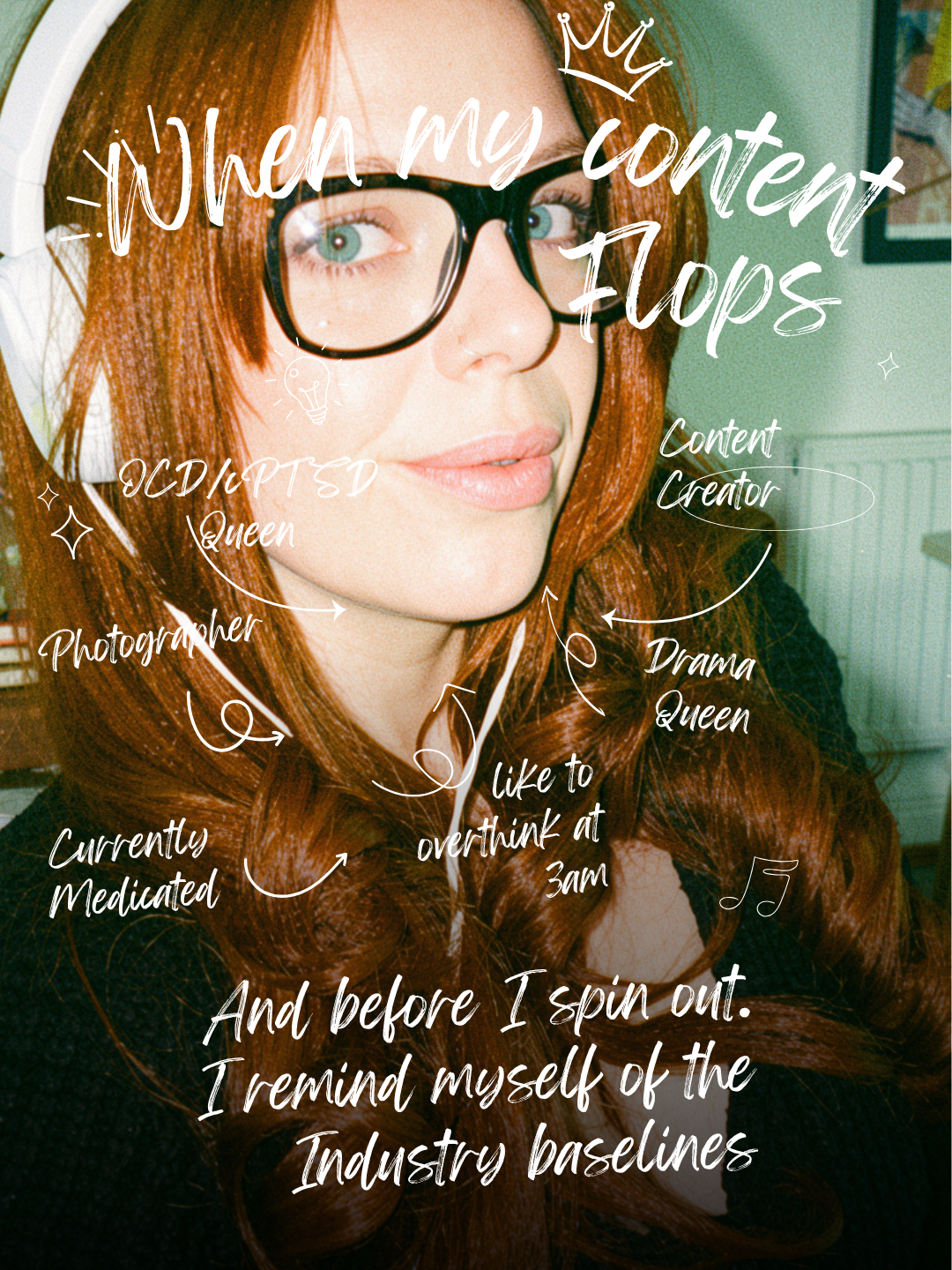
Sarah Sadler. Content Creator Chester
Let me set the scene.
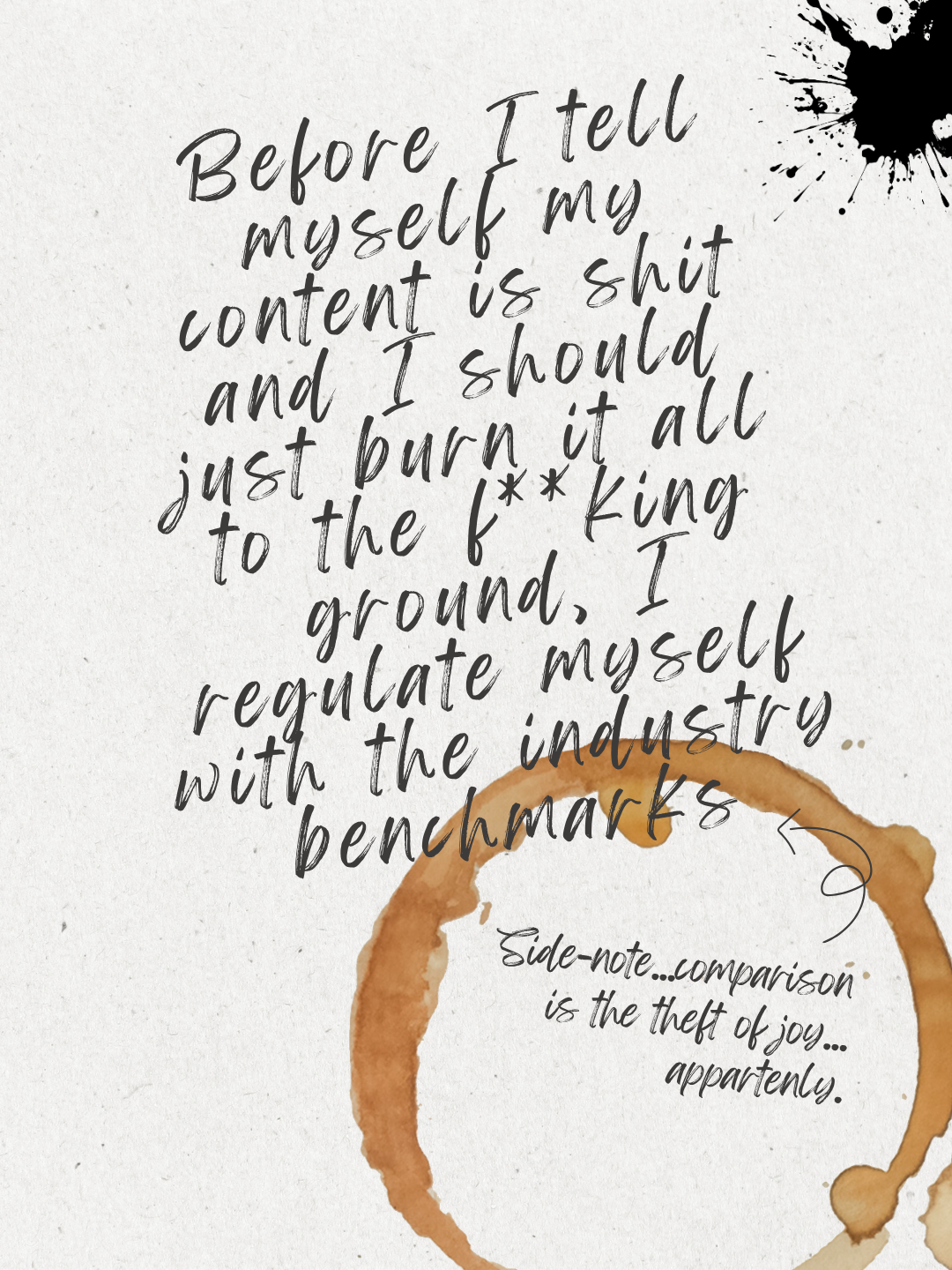
It's 3am. My content is out. And instead of sleeping like a sensible human being, I'm lying there running through every creative decision I made, convincing myself I am completely terrible at this, and that I should probably just burn the whole thing to the ground and go back to photographing people for a living.
Sound familiar?
Here's the thing I've learned, not from a course, not from a marketing guru, but from actually being in the trenches as both a content creator and a business owner for over two decades: the spiral is not the problem. The comparison is.
The Real Issue With "My Content Flopped"
When we say our content flopped, what we usually mean is: someone else's got more likes.
But here's what we're not asking:
More likes than what?
Compared to whom?
Against what baseline?
We're not comparing data. We're comparing feelings. And feelings — especially at 3am — are catastrophically unreliable metrics.
As a content creator based in Chester, I work with small businesses and founder-led brands who are producing content consistently and still feeling like nothing is working. Nine times out of ten, the content isn't the problem. The context is.
The Number Nobody Talks About
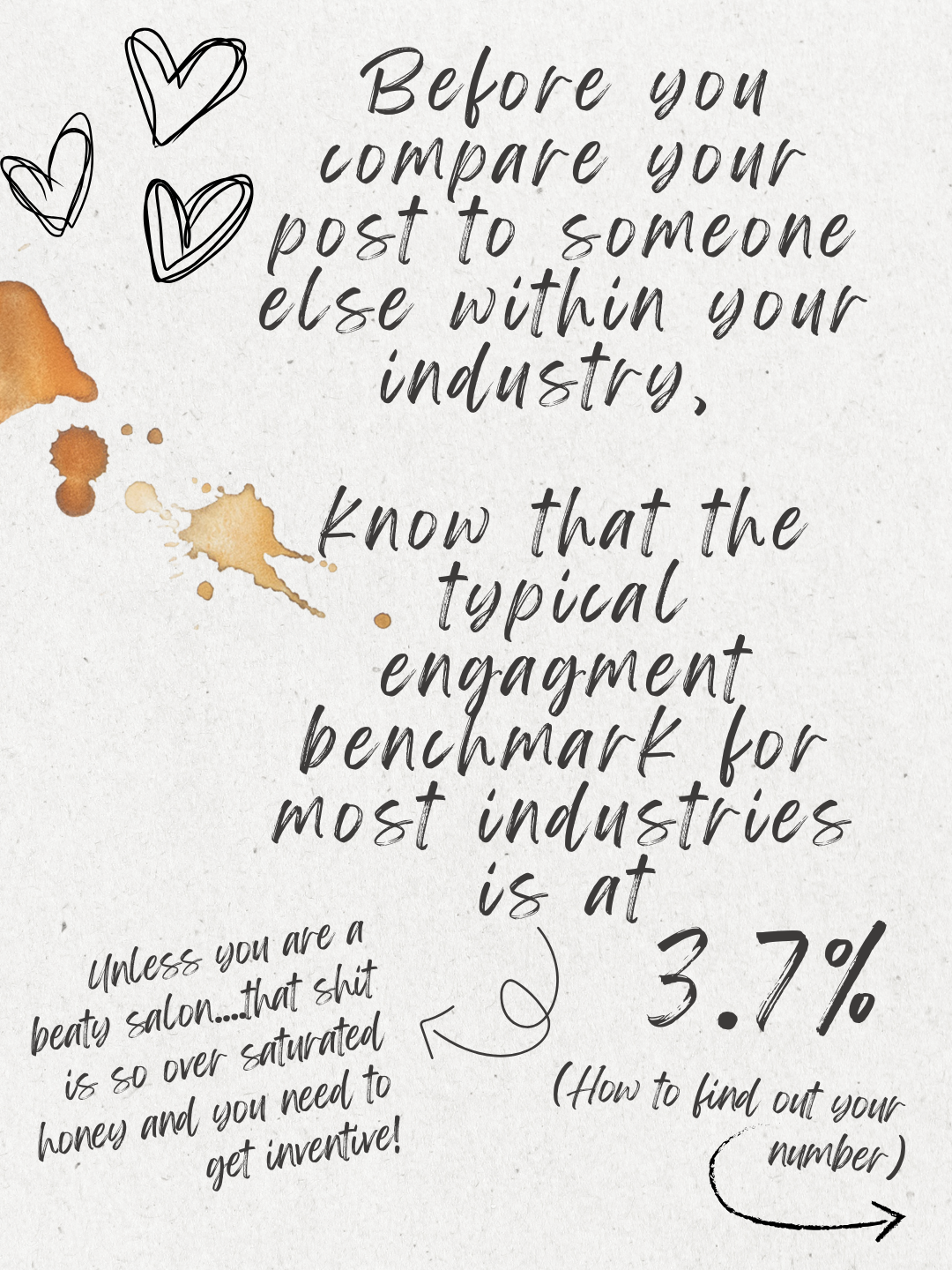
Before you compare your post to anyone else's — anyone within your industry, anyone with more followers, anyone who seems to be absolutely smashing it — you need to know the industry benchmark for engagement.
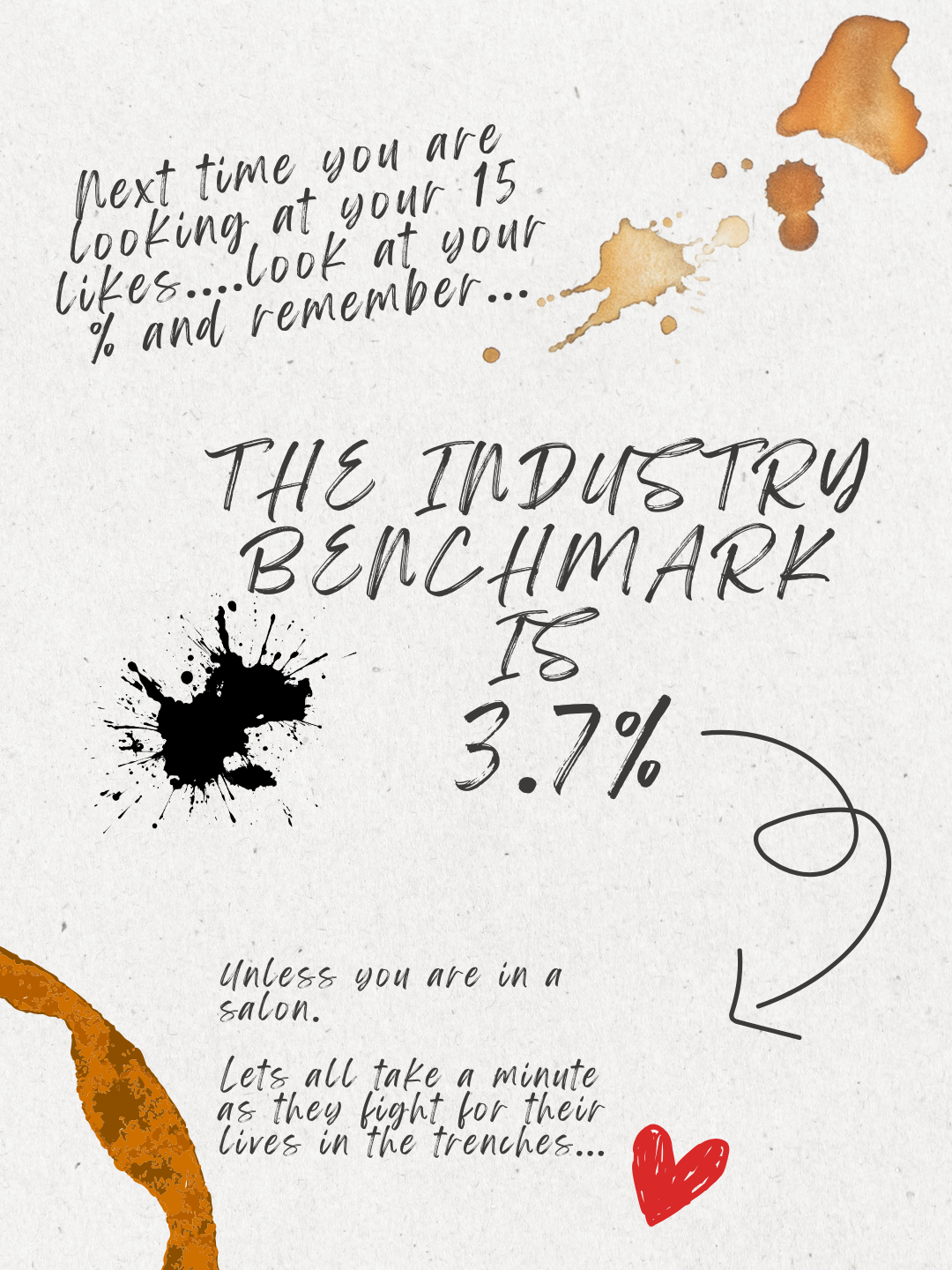
It's 3.7%.
That's it. That's the average across most industries. Not 10%. Not 20%. Not the viral numbers you see being celebrated on your feed.
(Unless you're a beauty salon. In which case — bless you — that space is so saturated that you genuinely do need to be more inventive. We salute you.)
Most business owners I speak to through my work — both here in Chester and beyond — have no idea this number exists. They're measuring their content against the loudest voices in their niche, not against any actual standard.
That's not strategy. That's self-sabotage.
How to Actually Calculate Your Engagement Rate
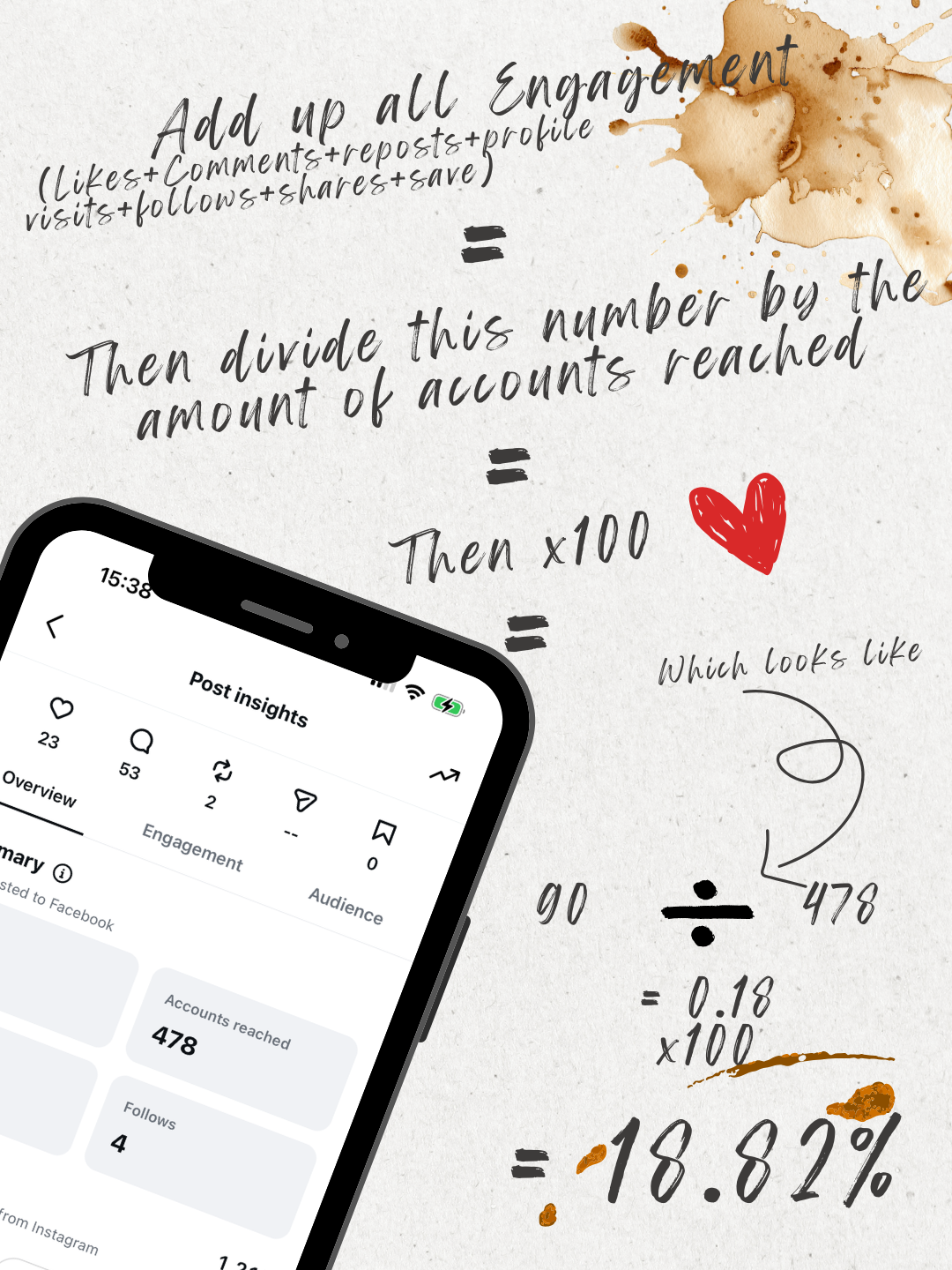
Here's where it gets slightly maths-y. Stay with me.
Instagram's text and image insights don't hand you your engagement rate percentage. For that, you need to do a tiny bit of arithmetic — and I promise it's worth it.
The formula:
Add up all your engagement (likes + comments + reposts + profile visits + follows + shares + saves)
Divide that total by your accounts reached
Multiply by 100
That's your engagement rate.
So if your numbers look like this — 23 likes, 53 comments, 2 reposts, 8 profile visits, 4 follows — that's 90 total engagements. Divide by 478 accounts reached. Multiply by 100.
You get 18.82%.
That post didn't flop. That post performed nearly five times the industry benchmark. But if you're just looking at 23 likes and comparing it to someone with 200, you'd never know that.
This is the difference between data and perception. This is the difference between strategy and spiral.
For Reels: Look at Your Like Rate
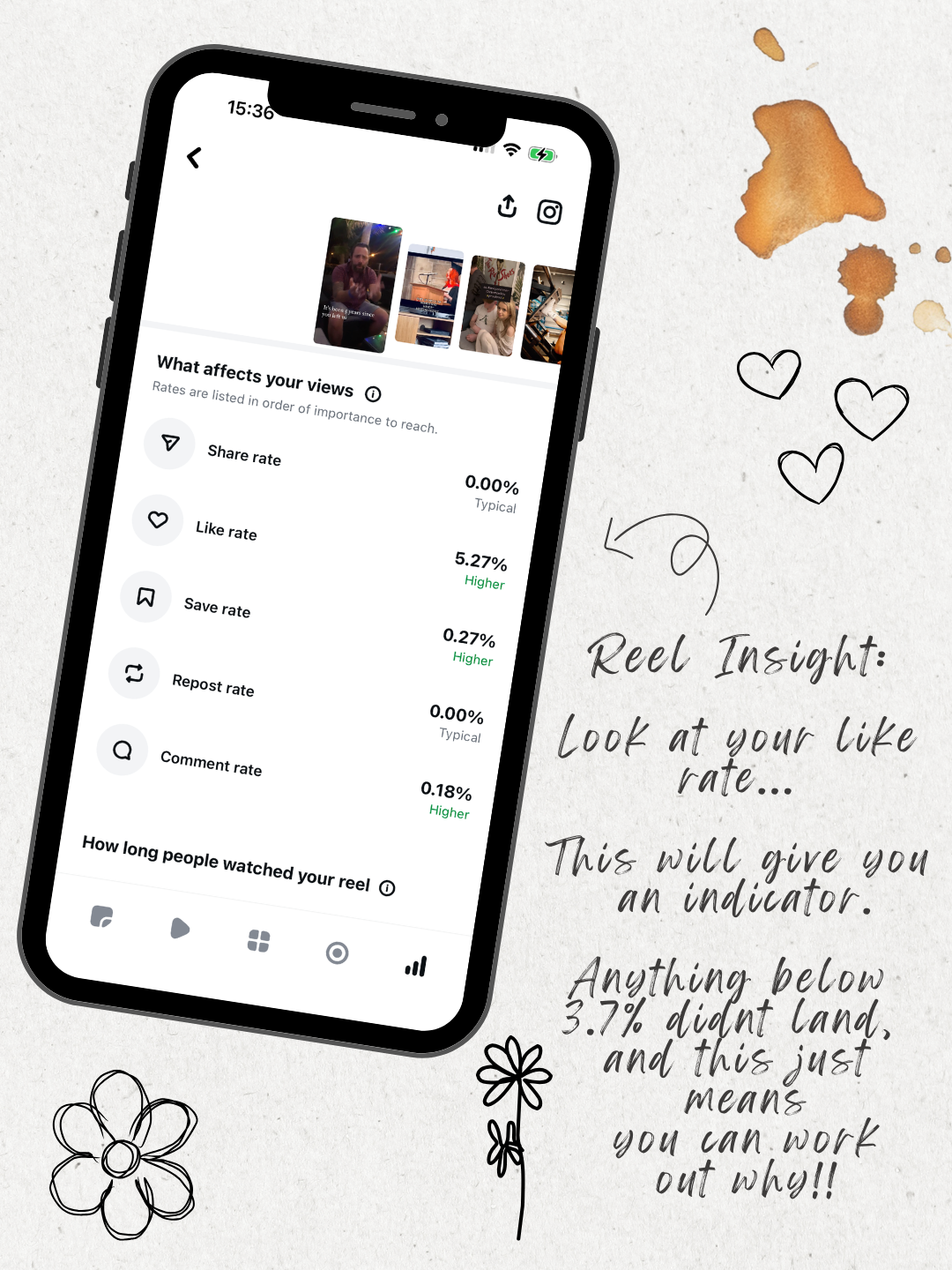
If you're posting Reels — and most of you are — Instagram does actually show you your rate breakdowns inside the insights panel. Look specifically at your like rate.
Anything below 3.7%? That reel didn't quite land. And that's not a disaster — that's information. Something about the hook, the pacing, the messaging, or the audience match wasn't quite right. You can work out why. You can adjust.
Anything above 3.7%? That content resonated. Study it. Understand what it did. Do more of that.
This is what I mean when I say most businesses don't need more content — they need clearer communication. Because once you start reading your numbers instead of feeling them, the path forward gets a lot less overwhelming.
Why I Teach This (And Why It Matters to Me)
I've been a photographer since 2003. I've run my own studio since 2011. I spent years creating content that got attention, good engagement, high reach, genuine interaction… and still couldn't work out why it wasn't converting into aligned clients or sustainable business growth.
The answer, when I finally found it, was simple: attention is not the same as alignment.
I was attracting the wrong people with the right content. Or the right people with content that didn't communicate what I actually did clearly enough. Understanding the numbers ….truly understanding them, not just glancing at them…. was part of what helped me see the difference.
Now, through my work as a content strategist and photographer in Chester, I help other business owners build the same kind of clarity. Strategic, psychologically-aware visual communication that doesn't just get seen … it gets understood, trusted, and acted on.
A Note on Being Kind to Yourself
You and your content are doing better than you think.
Not because I'm trying to make you feel good (although I am, genuinely), but because the standard you're measuring yourself against is probably wrong. The viral post you're envying might have a 2% engagement rate. The creator you think is smashing it might be attracting thousands of people who will never buy from them.
Numbers without context are just noise.
So next time you're looking at your 15 likes at midnight, spiralling … STOP. Pull up your insights. Do the maths. Compare yourself to the benchmark, not to someone else's highlight reel.
You might find out you're doing extraordinarily well.
Want to Create Content That Actually Works?
If you're a founder-led brand or small business in Chester or beyond, and you're posting consistently without seeing the results you want … let's talk.
I work from a content creator studio in Chester, helping businesses move from performative visibility to genuine strategic communication. Whether that's through one-to-one strategy, studio sessions, or content direction, the goal is always the same: content that attracts the right people, not just attention.
Because the best content isn't the loudest. It's the most aligned.
Find me on Instagram or get in touch to find out how I can help your brand communicate with more clarity and trust.
How to Plan a Content Shoot Day Near Chester Without Losing Your Mind
Planning a content shoot day near Chester? Here’s how to organise photo, video and podcast content without the chaos, plus what to look for in a creative studio space.
If you have ever turned up to a shoot with a vague plan, too many ideas and not enough structure, you will know how quickly a content day can go off the rails.
What looks simple on social media usually involves a fair bit of thought behind the scenes. The good news is that a successful content shoot day does not need to feel chaotic. With the right plan, the right space and a bit of foresight, you can create a whole bank of useful content in one session without frazzling yourself in the process.
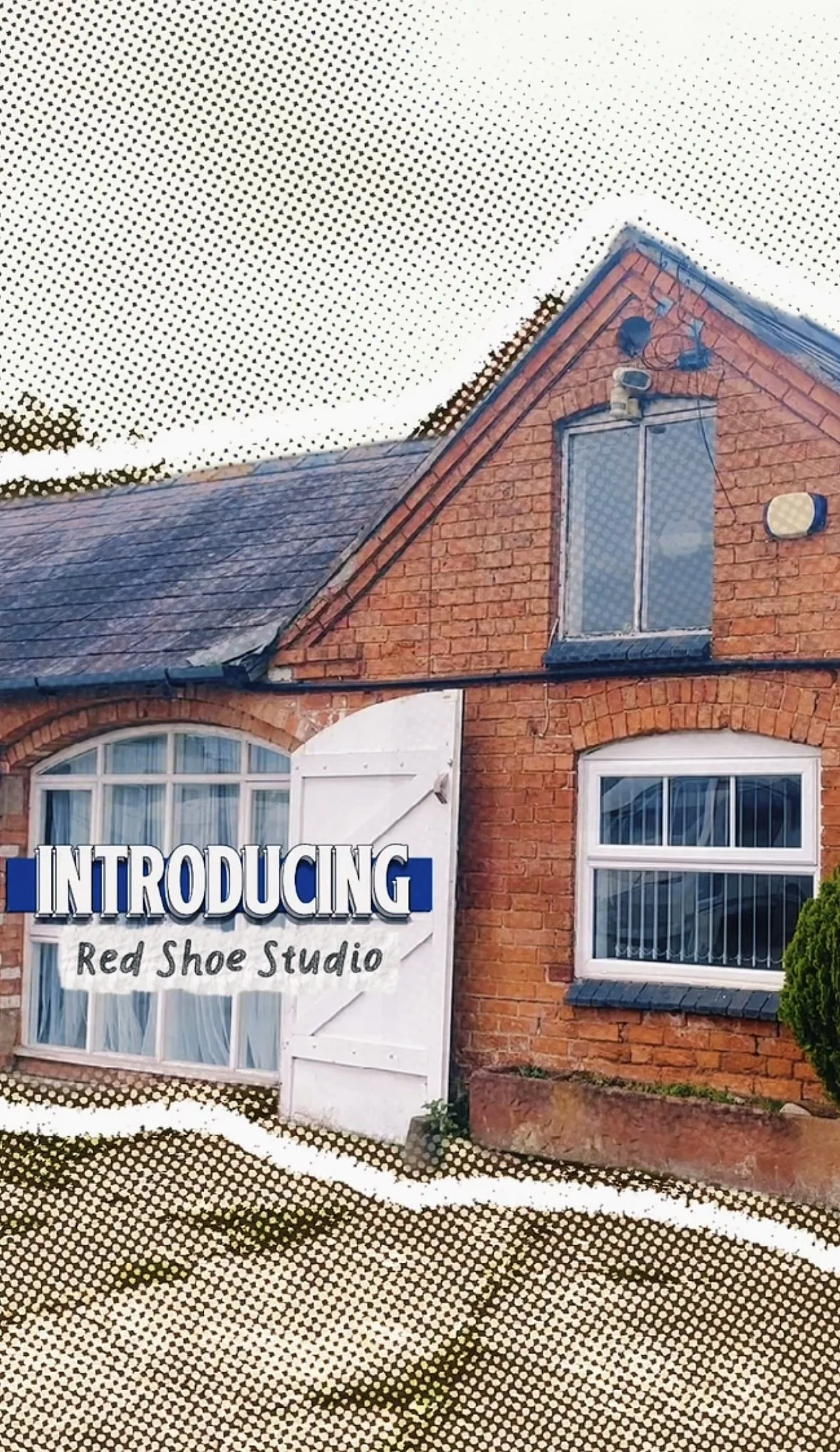
At Red Shoe Studio, just 10 minutes outside Chester city centre on Whitchurch Road, I see how much easier content days become when the setup actually supports the work. Whether you are shooting video, recording a podcast, planning social media content or capturing brand photography, the difference is usually in the prep.
Start with the job the content needs to do
Before you think about outfits, props or camera angles, get clear on the purpose of the content.
Ask yourself:
What is this content for?
Who is it for?
Where will it be used?
What do I want it to achieve?
A content day for Instagram reels is very different from a day focused on website imagery or podcast recording. If you skip this step, it is easy to end up with a gallery full of decent-looking content that has no real use. That is a waste of your time, your energy and probably your money too.
Start with the outcome, then build the day around it.
Decide exactly what you want to create
One of the biggest mistakes people make is booking a studio or planning a shoot with only a fuzzy idea of what they want.
Be specific.
Write out a list of deliverables before the day. For example:
brand photos
talking-head videos
short-form social media clips
podcast episodes
behind-the-scenes footage
website images
launch content
client education content
This gives the day shape. It also helps you judge how much time you need, how many setups you want, and whether you need a photographer, videographer, engineer or just a strong plan and a good space.
Think in batches, not one-offs
A content shoot day should not be about creating one nice photo and calling it a win.
The smartest way to use your time is to batch content. That means creating multiple pieces of content in one go, grouped by purpose.
A simple way to do this is to think in four categories:
Core brand content
These are the essential photos and videos that represent you and your business clearly.
Educational content
This is the useful content that answers questions, explains what you do, or helps your audience understand your process.
Promotional content
This covers launches, offers, services and anything that needs to drive action.
Personality content
This is the human side of the brand. The details, the moments, the small pieces that help people connect with you as a real person rather than a polished brochure.
When you plan this way, you come away with a much more useful bank of content instead of a random mix of clips that do not really belong together.
Choose a studio that works with you
The space you choose affects far more than the backdrop.
A good studio can make the day smoother, calmer and more productive. A bad one can drain your energy before you have even started.
If you are planning a content shoot day near Chester, it helps to choose a studio that gives you flexibility. Red Shoe Studio is set up for exactly that. Based on Whitchurch Road, just 10 minutes from Chester city centre, the studio is available for photo shoots, video content, podcast recording and meetings.
It includes studio lighting, a huge beautiful window for natural light, free parking, WiFi, a kitchen and bathroom, so it feels practical as well as creative. Being based at Applegates Farm Shop on the A55 also means there is an on-site cafe and antiques shop, which makes the whole day feel a lot less clinical and a lot more human.
That matters. People create better when they are comfortable.
Plan your outfits, props and setup before the day
This sounds obvious, but it gets skipped all the time.
Choose outfits that suit your brand and work together visually. Bring props only if they genuinely add to the content. Think about the sort of setups you want before you arrive.
Do you want natural light or more controlled studio lighting?
Do you need a clean backdrop?
Will you want multiple looks from one space?
Are you recording a podcast as well as taking photos or filming video?
Making these decisions ahead of time saves you a lot of brain fog on the day itself.
Leave space for the unplanned moments
A good plan matters, but over-planning can make everything feel stiff and over-rehearsed.
You want enough structure to stay on track, but enough breathing room for the better moments to appear. Sometimes the most natural photos, the best lines in a video or the strongest snippets of behind-the-scenes content come from what happens in between the planned shots.
That is usually where the good stuff lives.
Do not ignore the boring practical details
This is the bit people forget, then regret.
A smooth content day depends on the practical setup as much as the creative one. That means thinking about things like:
parking
travel time
toilets
WiFi
refreshments
charging points
break space
time to reset between takes
These details are not glamorous, but they make a real difference. Red Shoe Studio was designed to feel more like a home-from-home than a cold hire room, which helps people settle in and actually get on with the work.
Why Red Shoe Studio works for content days near Chester
Red Shoe Studio is more than just a studio for hire. It is a creative space shaped by the reality of content work.
As a content creator and social media manager, I know how much planning, structure and flexibility goes into making content that actually works online. That is why the studio is designed to support the full process, whether you are recording a podcast with an engineer included, filming social media videos, shooting brand photography or using the space for a planning session.
It is practical, comfortable and easy to access, with the kind of setup that helps people get into flow instead of fighting the environment.
Planning your next content shoot day near Chester?
If you are looking for a flexible studio near Chester for photo shoots, video content, podcasting or creative planning, Red Shoe Studio is available to hire on Whitchurch Road, just 10 minutes outside Chester city centre.
And if you need support with the content itself, not just the space, I can help with that too.
Get in touch to enquire about studio hire or content creation support.

TikTok, YouTube, and the Death of Polished Content: Why Real Wins in 2026
Because in a world of AI Creation, the 2026 Content Creator and Marketing trend will be REAL Reel content. Here’s why:
Because in a world of AI Creation, the 2026 trend will be REAL reel content. Here’s why:
There was a time when “good marketing” meant polished visuals, scripted messaging, and a brand voice so safe it could pass a corporate background check.
That time is over.
Not because people suddenly became deep, thoughtful consumers of content. Let’s not get carried away. But because platforms like TikTok and YouTube have quietly shifted the rules of visibility, trust, and attention.
And if you’re still trying to show up online like a brochure with a pulse, you’re already behind.
This isn’t about chasing trends. It’s about understanding how people actually consume content now, and adjusting accordingly.
TikTok: Where Perfection Goes to Die (Thankfully)
TikTok didn’t win because it was polished.
It won because it felt real.
For years, businesses were told to present the “best version” of themselves. Clean branding. Perfect lighting. Carefully curated messaging. The digital equivalent of smiling through gritted teeth.
Then TikTok showed up and rewarded the opposite.
Suddenly:
Messy behind-the-scenes clips outperformed studio shoots
Unscripted thoughts beat rehearsed pitches
Relatable moments drove more engagement than “high production value”
Which, frankly, makes sense. People trust what feels human. Not what feels manufactured.
And no, this isn’t just for Gen Z anymore. With over a quarter of users now over 35, TikTok has quietly become one of the most powerful platforms for reaching actual decision-makers … not just teenagers dancing in kitchens.
Why Authentic Storytelling Works (Even If You Hate the Word “Authentic”)

“Be authentic” is one of those phrases that sounds nice and means absolutely nothing unless you define it.
So let’s define it.
Authentic content isn’t:
Oversharing your entire life
Filming yourself crying in the car
Pretending to be “raw” for engagement
Authentic content is:
Clear thinking, expressed simply
Real experiences, shared honestly
Useful ideas, explained without fluff
It’s not about vulnerability for the sake of it. It’s about clarity.
And clarity is what builds trust.
What to Actually Post on TikTok (Without Losing Your Mind)
If your strategy currently consists of “I should probably post more,” congratulations, you’re in the majority.
Here’s what actually works:
1. Behind-the-Scenes Content
People don’t just want the outcome. They want the process.
Show:
How you work
How you think
What goes into what you do
This builds credibility without you having to say “I’m an expert” every five minutes.
2. Quick Educational Insights
You don’t need a 10-part series to be valuable.
Short, sharp insights work:
“Here’s what most people get wrong about X”
“If I had to start again, I’d do this instead”
“This is why your content isn’t working”
You’re not trying to impress people. You’re trying to help them understand something quickly.
3. Customer or Client Stories
Not testimonials. Stories.
There’s a difference.
Instead of:
“Sarah was amazing, highly recommend!”
Try:
What problem they had
What changed
What the outcome was
People connect with journeys, not praise.
4. Trends (Used Properly, Not Desperately)
You can engage with trends without embarrassing yourself.
The rule is simple:
If it doesn’t connect to your message, don’t force it.
You’re building a brand, not auditioning for relevance.
5. Longer-Form Content (Yes, On TikTok)
TikTok is quietly pushing longer videos because — shock — people will watch longer content if it’s actually interesting.
Use this to:
Explain ideas properly
Tell fuller stories
Go deeper than surface-level tips
Attention spans aren’t dead. Bad content is.
The Real Strategy: Consistency Without Burnout

Here’s where most people go wrong.
They either:
Post sporadically and hope for the best
Burn out trying to post daily with no strategy
Neither works.
Instead:
Set a realistic content rhythm
Focus on clarity over quantity
Treat content like a system, not a mood
You’re not here to “go viral.” You’re here to be understood.
YouTube: The Slow Burn That Actually Pays Off
If TikTok is fast attention, YouTube is long-term authority.
And unlike most platforms, YouTube content doesn’t disappear after 48 hours like a forgotten New Year’s resolution.
It compounds.
YouTube is the second-largest search engine in the world. Which means people aren’t just scrolling. They’re looking.
That changes everything.
Why YouTube Matters for SEO and AI Search
Search is evolving.
It’s no longer just:
Blog posts
Websites
Written content
Video is now a major part of how information is discovered, indexed, and surfaced — especially in AI-driven search results.
Which means:
If you’re not creating video, you’re missing a huge opportunity to be found.
What to Create on YouTube (That People Will Actually Watch)
You don’t need to reinvent the wheel. You just need to align with intent.
1. Tutorials
Teach something specific.
Not:
“How to succeed in business”
But:
“How to film content on your phone that doesn’t look terrible”
Specific wins.
2. Explainers
Break down ideas clearly.
Concepts
Strategies
Common mistakes
You’re not showing off. You’re making things make sense.
3. Process-Based Content
Show how you do what you do.
This builds:
Trust
Authority
Transparency
And conveniently removes the need for hard selling.
4. Blog-to-Video Strategy
If you’re already writing content, turn it into video.
This:
Increases discoverability
Gives people multiple ways to engage
Strengthens your SEO footprint
One idea. Multiple formats. Less effort, more reach.

Optimisation: The Boring Bit That Actually Matters
You can create the best video in the world, but if no one can find it, it’s essentially a very expensive hobby.
Focus on:
Clear, keyword-driven titles
Descriptions that actually explain the content
Relevant tags (not random guesses)
You don’t need to “hack the algorithm.” You need to be understandable.
TikTok vs YouTube: Stop Choosing, Start Integrating
This isn’t a competition.
TikTok and YouTube do different jobs:
TikTok = discovery and connection
YouTube = depth and authority
Use TikTok to:
Test ideas
Build visibility
Start conversations
Use YouTube to:
Expand on those ideas
Build trust over time
Create long-term assets
Together, they form a system.
Separately, they’re just noise.
The Bigger Picture: Content That Actually Reflects You
Here’s the part most people avoid.
Platforms don’t fix bad messaging.
You can:
Post consistently
Follow every “strategy”
Optimise everything
…but if you don’t know what you stand for or how to communicate it, none of it sticks.
Content is an extension of identity.
And if that identity is unclear, your content will be too.
Final Thought (The One People Ignore)
You don’t need more content.
You need better alignment between:
Who you are
What you say
How you show up
TikTok and YouTube aren’t magic solutions.
They’re tools.
Useful ones, powerful ones — but still just tools.
Used well, they can build visibility, trust, and opportunity.
Used badly, they’ll just give you more content to feel overwhelmed by.
Choose wisely.

Why Creating Content for Yourself Feels So Difficult (And What Most Creatives Get Wrong)
Why creating content for your business feels so difficult
Creating content for clients is structured, strategic, and outcome-driven.
There’s always a clear objective:
Generate leads. Build authority. Increase conversions.
You’re solving a defined problem, within defined boundaries.
But when you create content for yourself, those boundaries disappear.
And suddenly, what should feel natural becomes strangely difficult.
Not because you lack ideas, but because you’ve been trained to think like a strategist, not a human. The “Client Brain” problem shows up when experienced creatives habitually filter every thought through questions of audience fit, positioning and commercial viability — a method that serves businesses brilliantly but suffocates personal content. Suddenly you’re constructing messages instead of sharing ideas, managing perception instead of voicing opinions; the result is polished yet impersonal, clear but forgettable, strategic yet disconnected. In trying so hard to appear credible, you lose what actually makes you recognisable.
Social Media Was Never Designed for Pitch Decks
There’s a fundamental misunderstanding in how many professionals approach personal content.
Social platforms reward:
- Relatability
- Consistency of voice
- Perspective
Not perfection.
Yet many creators treat their profiles like miniature corporate websites.
Every post becomes a performance.
Every sentence feels engineered.
But audiences don’t connect with positioning statements.
They connect with people.
This is why overly polished content often underperforms, while raw, perspective-driven posts gain traction.
It’s not about lowering standards.
It’s about shifting intention.
The Psychology of Over-Filtering
Research in behavioural psychology suggests that over-monitoring self-expression reduces authenticity and increases cognitive load.
In simple terms:
The more you try to control how you’re perceived, the less natural you become.
This is known as self-presentation theory (Goffman, 1959), where individuals manage impressions in social interactions.
On platforms like LinkedIn, this often leads to:
- Over-edited opinions
- Generic insights
- Risk-averse content
While this protects professional image, it also limits differentiation.
And in a saturated content environment, sameness is invisible.
Personal Brand vs Professional Persona
A critical distinction many overlook:
A professional persona is how you want to be seen.
A personal brand is how you are consistently experienced.
The difference lies in:
- Tone
- Perspective
- Consistency of thought
Building a personal brand requires:
- Sharing unfinished thinking
- Expressing nuance
- Allowing space for evolution
This feels uncomfortable, particularly for those used to delivering “finished” work.
But it’s also what creates depth and trust.
Why Trust Doesn’t Come From Perfect Content

Trust is not built through flawless execution.
It’s built through:
- Consistency over time
- Clarity of thinking
- Authentic perspective
Research in digital trust (Edelman Trust Barometer) consistently shows that audiences value:
- Transparency
- Relatability
- Expertise demonstrated through insight, not claims
This is why content that feels overly “produced” can create distance.
It signals control, not connection.
The Real Goal: Recognition, Not Perfection
The purpose of personal content is often misunderstood.
It’s not to impress.
It’s to be recognised.
Recognition comes from:
- A distinct voice
- Repeated ideas and themes
- A clear way of interpreting the world
This is what allows audiences to say:
“I know what this person stands for.”
And more importantly:
“I trust how they think.”
A More Effective Approach
Instead of asking:
“Will this get me clients?”
A better question is:
“Does this sound like me?”
Practical shifts:
- Share perspectives, not just conclusions
- Prioritise clarity over polish
- Repeat core ideas without overthinking originality
- Allow content to reflect thinking in progress
This does not mean abandoning strategy.
It means integrating it with personality.
Final Thought
Creating content for yourself feels difficult because it requires a different skill set.
Not just execution.
But self-expression.
The creatives who succeed are not the ones who sound the most professional.
They are the ones who are the most recognisable.
And in a landscape full of noise, that is what cuts through.
Looking for a Studio in Chester? Here’s What to Know Before You Book
studio hire chester guide
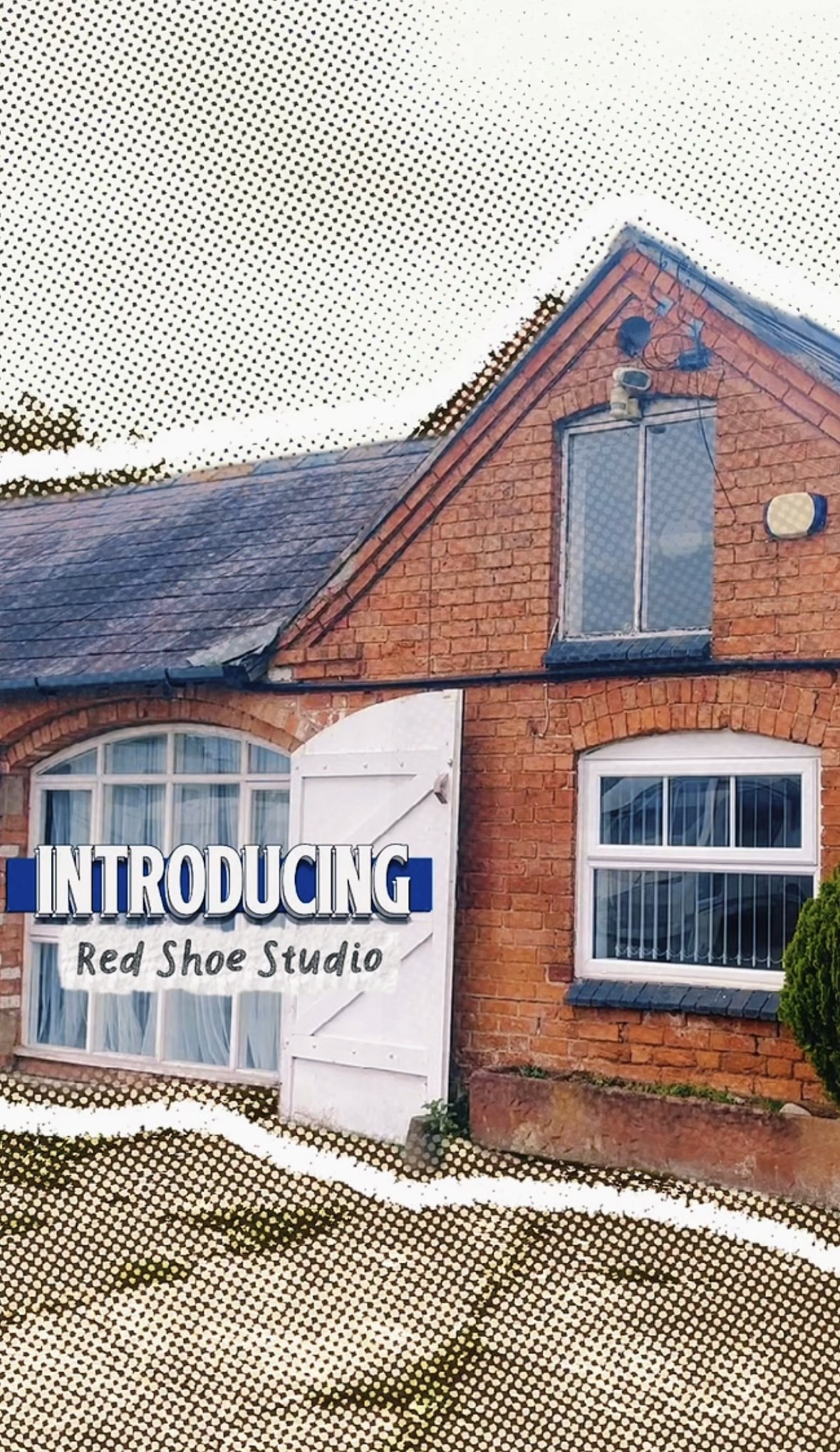
If you’re searching for a studio in Chester, chances are you already have something in mind.
Maybe you need:
- a photography studio
- a space to film content
- somewhere to record a podcast
- or even just a clean, quiet space to meet and create
But here’s the problem.
Not all studios are set up the same, and choosing the wrong one can make your shoot, recording or session far harder than it needs to be.
So before you book anything, here’s what actually matters.
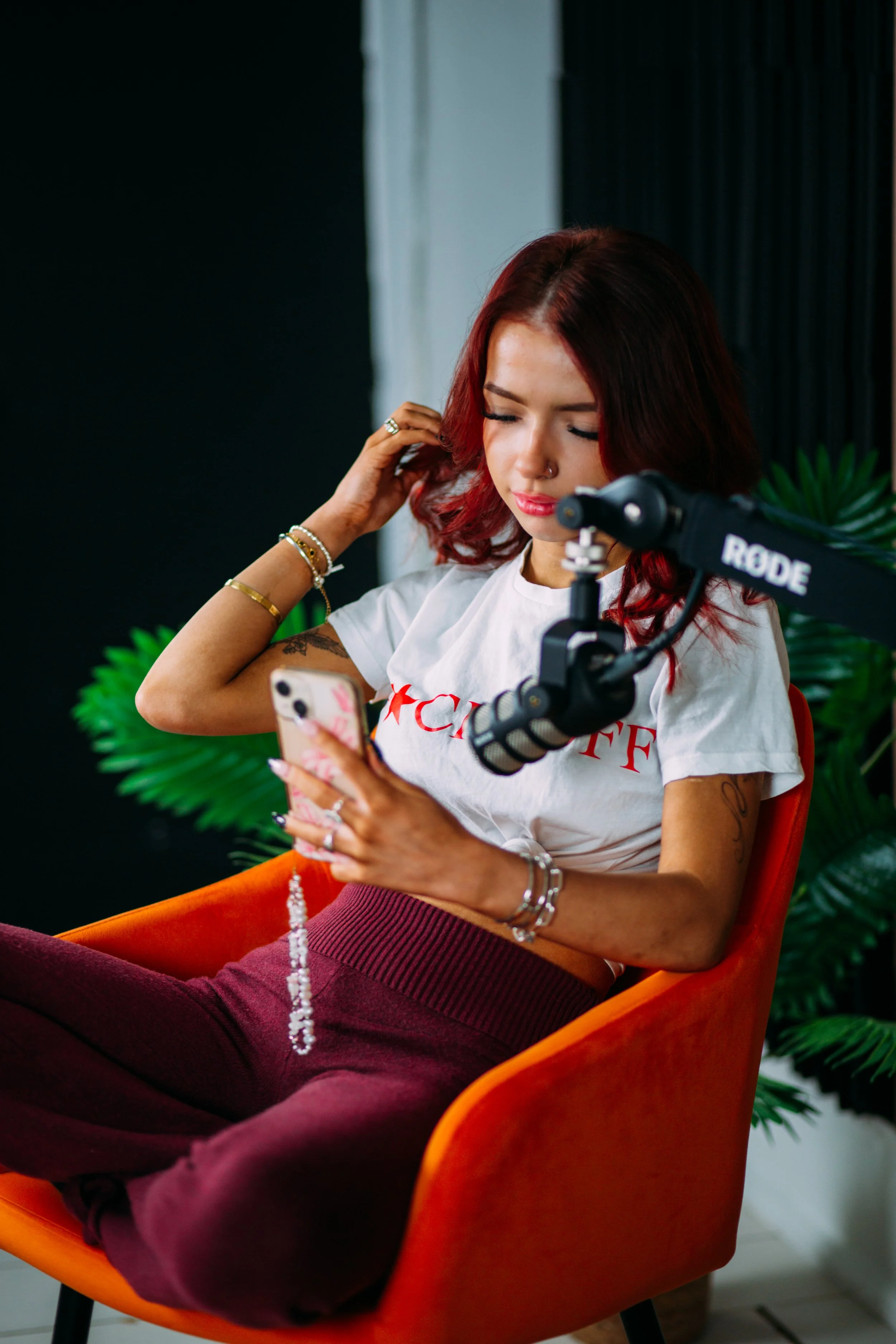
1. What are you actually using the space for?
This sounds obvious, but most people skip it.
A photography studio isn’t always ideal for:
- video content
- podcasts
- or meetings
And a podcast studio might not give you the flexibility you need for visual content.
Before you book a studio in Chester, be clear on:
- what you’re creating
- how you’ll use the space
- and what setup you actually need
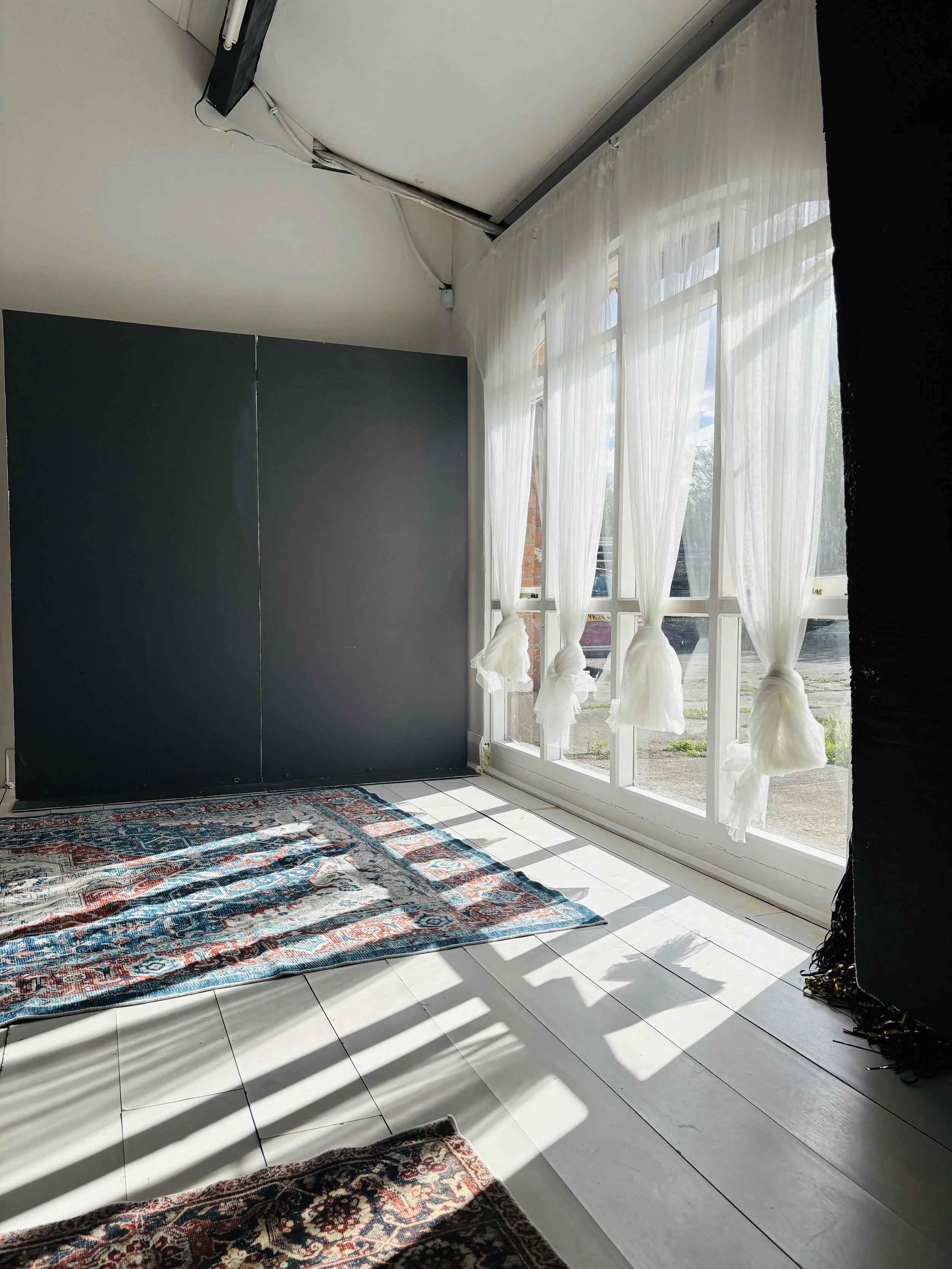
2. Is the space flexible enough?
The best studio spaces aren’t just “one setup.”
They allow you to:
- move things around
- change lighting
- adapt the space to your content
Whether you’re shooting brand content, filming for social media, or recording a podcast, flexibility saves time and frustration.
3. Do you need support, or just the space?
Some people want:
> a room and they’ll handle the rest
Others need:
> guidance, setup help, or content support
There’s no right answer, but knowing this upfront helps you choose the right kind of studio hire.
If you’re creating content regularly, having someone who understands:
- filming
- structure
- and how content actually performs
…can make a big difference
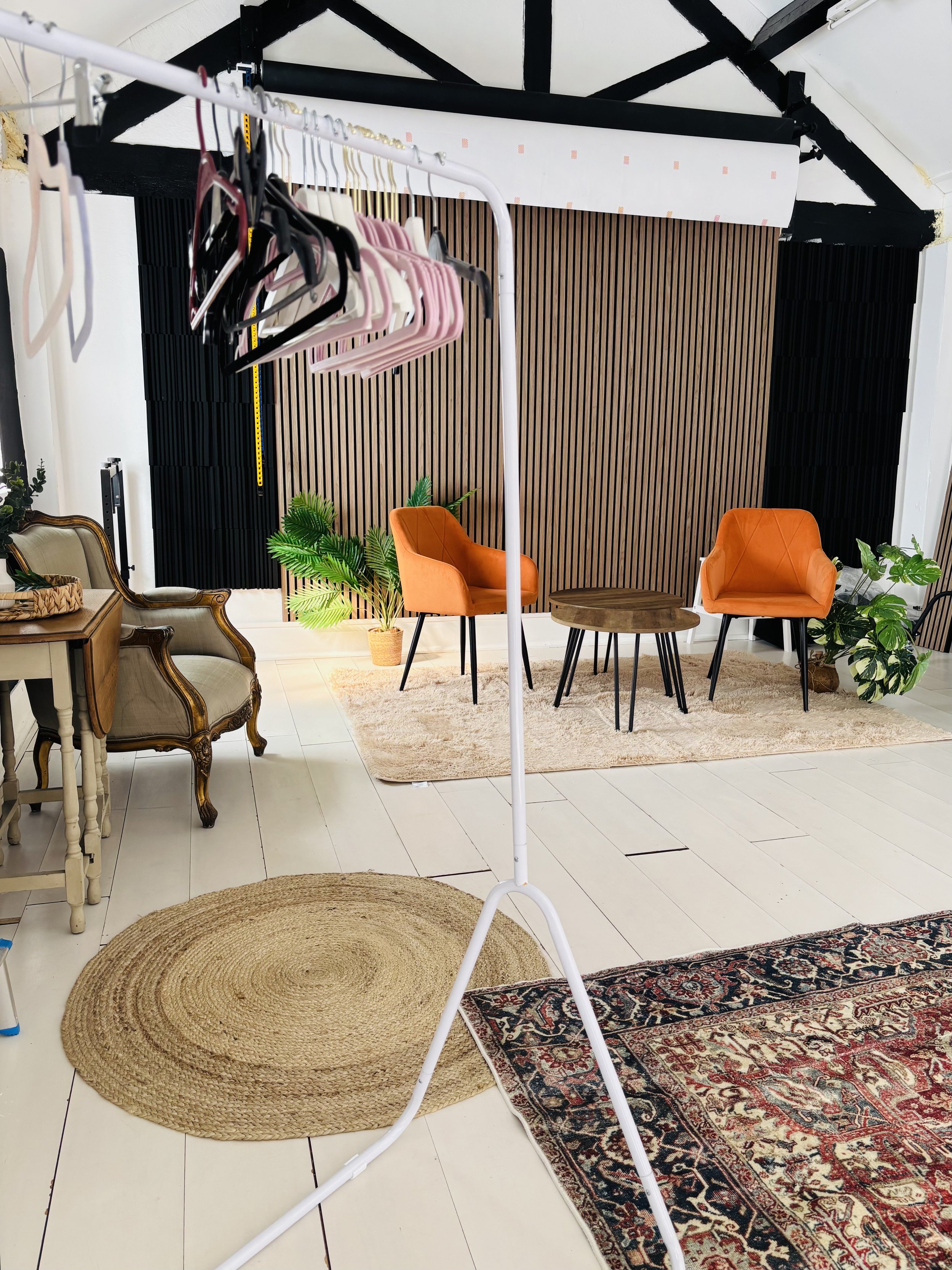
4. Location matters more than you think
When searching for a studio for hire in Chester, think beyond just the postcode.
Ask yourself:
- Is it easy to get to?
- Is there parking nearby?
- Will your team or clients find it easily?
A good location removes friction before you’ve even started.
5. What kind of environment do you need?
Some studios feel:
- clinical
- empty
- or overly complicated
Others are designed to feel:
- calm
- creative
- and easy to work in
The environment you choose directly affects:
- how you show up
- how comfortable you feel
- and ultimately, the quality of what you create
So… what should you look for?
If you’re searching for:
- a photography studio for hire in Chester
- a content creator studio
- a podcast recording space
- or a flexible meeting and creative space
Look for somewhere that combines:
- flexibility
- simplicity
- and a space that actually works with you, not against you
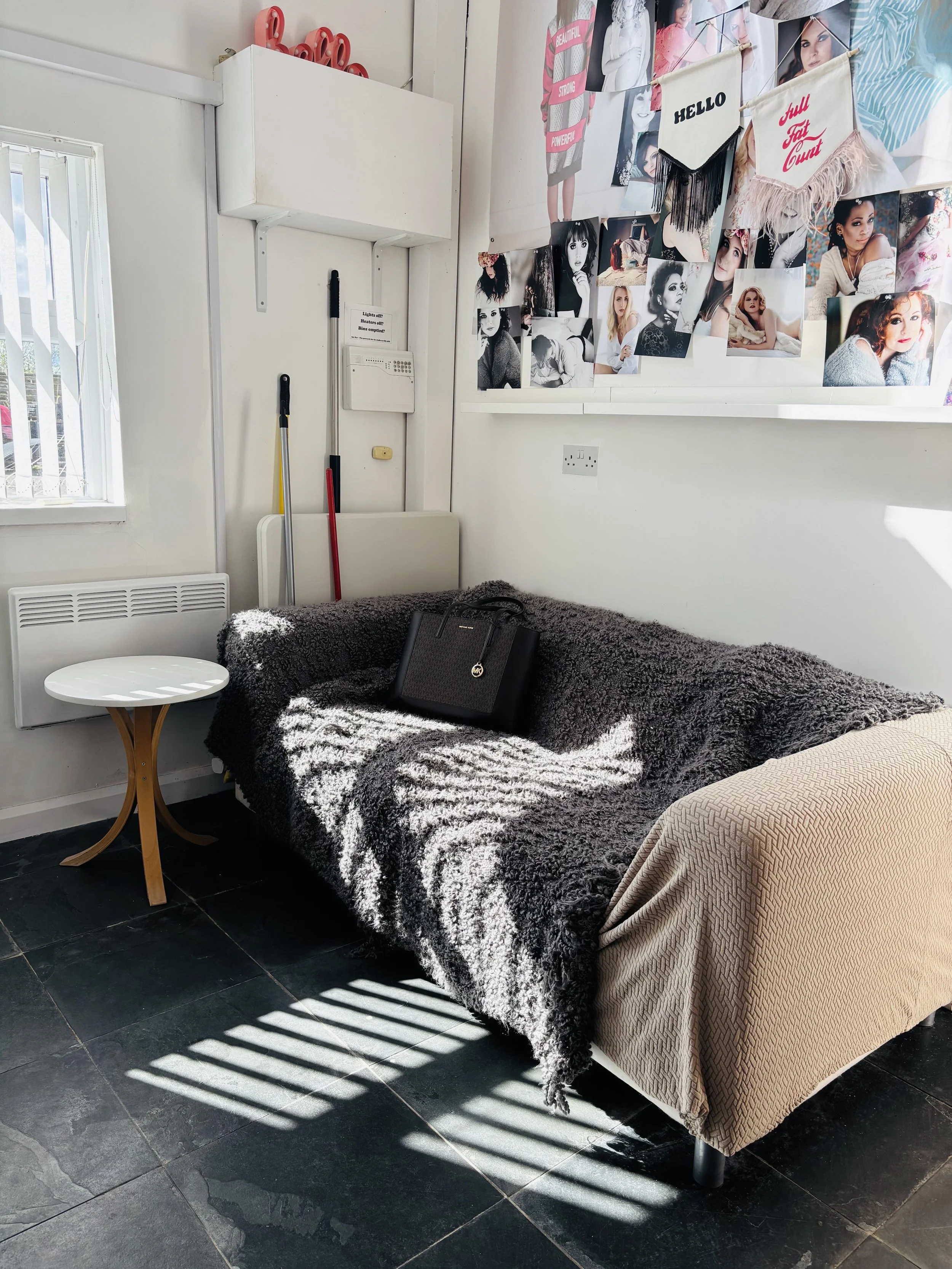
A space that works with you
If you’re looking for a studio in Chester that can be used for:
photography
content creation
podcast recording
or small team sessions
I offer a flexible studio space designed for exactly that.
It’s built to be simple, adaptable, and easy to use, whether you’re creating content regularly or just need a space for a specific project.
Ready to create something?
If you’ve been searching for a studio for hire in Chester, you already know how frustrating it can be to find the right space.
If you want something straightforward, flexible, and actually usable, get in touch.
Tell me what you’re working on, and I’ll help you figure out the best setup.