I was sat in the hairdressers chair, getting my 6 weekly maintenance done and listening to the salon girl chat. No conversation is off the table, and I’m here for it. A young woman sat in the chair next to me, telling the hairdresser about her photoshoot with her car (she loves her car). She had brought underwear from Ann Summers. Apparently she had asked the sales assistant for something “sluty but not too sluty”. At some point during the shoot she was hand cuffed to her car. I’m not sure why and I’m not here to yuk on anyone’s kink. But I bite my lip, I didn’t get involved. The photographer in me wanted to… but I know (believe it or not) when to shut the F up.
None of the following images are my own….
The Muse Collector

There is a particular type of photographer whose entire portfolio is 18-year-old girls, and every single one of them is captioned “muse.”
Let's call them the Muse Collector. They’re usually somewhere between 45 and dead inside. Their muses are always lying down. They are always slightly damp, as though they've been caught in a light drizzle on the way to the shoot, and they're looking up at the camera through their eyelashes like a spaniel who's eaten your sandwich. They call it art, and they’ll tell you about light for forty minutes if you let them.
We all know they’re uncool. Most of us have known for years.
But I ran a women's portrait studio for a long time, and what I learned in that studio is that a lot of women don't know why this style of portraiture is uncool. They can feel it, a bit like a draught. They just can't name it, because they've been looking at the world through the male lens their whole lives. Films, adverts, magazine covers and every portrait they've ever been told was beautiful were made the same way.
And once you see it, you can't unsee it. Which is a lovely moment, and also a slightly horrible one, because then you have to go back and look at everything again. I did. I unpicked the shit out of that until there was nothing left.
So I couldn't help but wonder…
How do you explain the male gaze to a woman who has only ever seen herself through it?
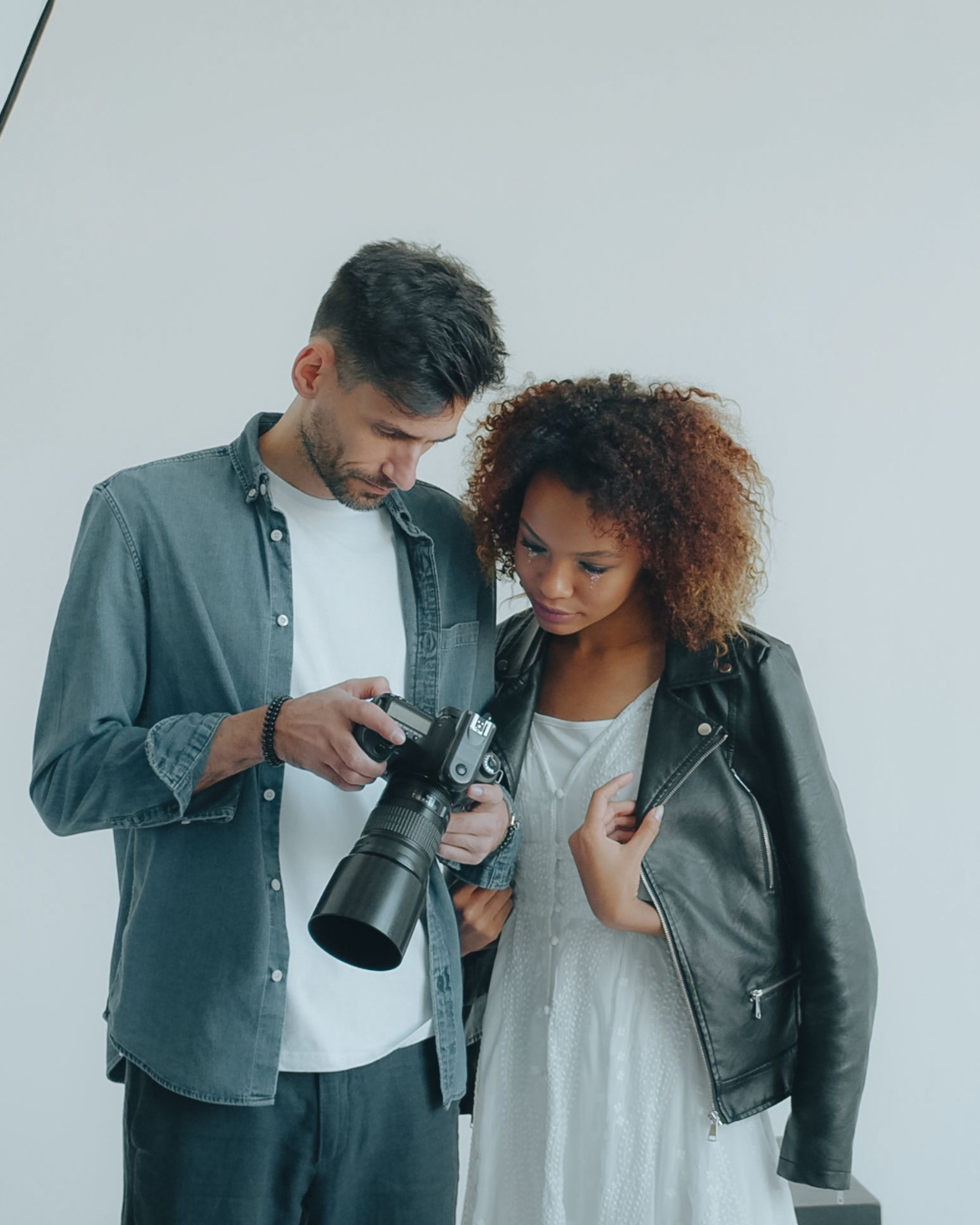
Two people who ruined looking for me (in a good way)
In 1972, an art critic called John Berger made a BBC series called Ways of Seeing, with a book to go with it. It opens with a line I think about most days: seeing comes before words. We look at things long before we can explain them, which is exactly why nobody ever thinks to question the way we look.
Then he said the bit that should be printed on every camera strap. In paintings, and in the culture that came after them, “men act and women appear.” Men look at women. Women watch themselves being looked at. A woman, he wrote, “must continually watch herself,” and so she ends up split in two, with a little man inside her head doing the looking, “the surveyor of woman in herself is male.”
If you have ever sucked your stomach in walking past a shop window when there was nobody else on the street, you've met him. He lives in there, rent-free.
Three years later, in 1975, a film theorist called Laura Mulvey published an essay in the journal Screen called “Visual Pleasure and Narrative Cinema,” and gave him a name. The male gaze. Her argument was that mainstream films are built for a straight male viewer. Men drive the story. Women are there to be looked at, and she had a gloriously clunky phrase for it: “to-be-looked-at-ness.”
Mulvey said the look comes from three places at once. The camera looks at the woman. The men in the film look at her. And you, in the cinema with your Revels, are put in the men's seat and made to look at her too, whoever you happen to be.
She's had her critics. Camille Paglia called it “utter nonsense,” and plenty of people have pointed out that not every viewer is a straight man. In 1992, bell hooks added the “oppositional gaze” to talk about race and who gets to look back. Mulvey herself revisited the idea in 1990. But fifty years on, the basic point has survived better than most of the films she was writing about.

Once you see it, it's everywhere
Think of Cameron Diaz's entrance in The Mask. The camera starts at her legs and works its way up like it's reading a menu. Jim Carrey's reaction is a literal cartoon, and you're meant to sit there having the same one. I was 16 when I saw it and I thought, mostly, that I should probably get a dress like that.
That's the trick of it. Being looked at just feels like normal.
And the numbers say it was normal. When the Annenberg Inclusion Initiative at the University of Southern California went through the 100 biggest films of 2015, women made up less than a third of the characters who even got a line. Of those women, 30.2% were dressed in something sexually revealing, compared with 7.7% of the men. 29% had some nudity, against 9.5% of men. So the women got fewer words, and fewer clothes.
Now go and look at the car advert where she's draped over the bonnet like a throw. Or the fitness influencer filming her own bum from below, which is the bit that really gets me, because nobody made her do it. Berger would say the little man in her head did. He's been doing the job for so long he doesn't even need a camera operator any more.
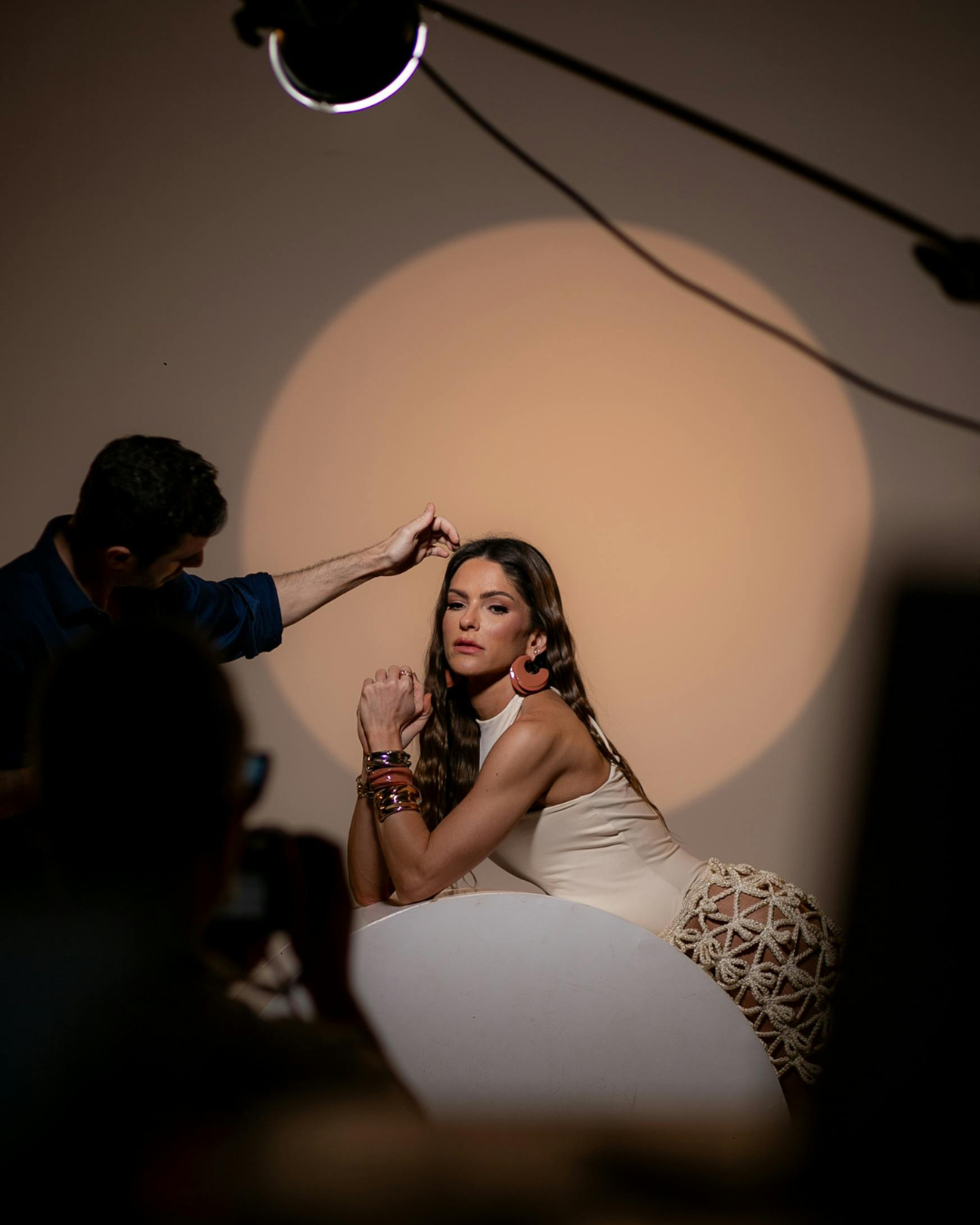
What the Muse Collector actually does with their camera
This is where I get to be a photographer about it, because the male gaze in a portrait is a set of decisions anyone can learn to spot.
They shoot from above, so she looks small. They tell her to tilt her chin down and look up, which makes her eyes big and her expression a bit pleading. They ask for the back arched and the lips parted. They crop at the forehead, or the neck, or somewhere much worse, so that what's left is a body with a face attached. They pick a model who's 18 because that's the youngest they can get away with. Then they retouch away every line and every opinion she ever had.

The question underneath all of it is who the picture is for. A male-gaze portrait is made for a man looking at her. She's being displayed to someone, and that's why you can feel the draught.
The giveaway is how the woman in it feels when she sees it. I've watched hundreds of women look at photos of themselves. When a portrait has been made for someone else, they go quiet and say “oh, that's nice.” When it's made for them, they burst out laughing and ring their sister.
Enter Emerald Fennell, with a bathtub
If you want to see the gaze turned round in real time, watch Emerald Fennell's films back to back. I did, and the whole world opened up like the deep heavy fabric had been removed from my eyes and I’d been handed a new dictionary. I could finally see the abstract thoughts floating in the back of my brain trying to find the disconnect of what I have seen and how I have felt my whole life. I could point to the screen and say “that is what I’ve been trying to say!”
Promising Young Woman (2020) won her the Oscar for Best Original Screenplay. Carey Mulligan's Cassie pretends to be blind drunk in bars to catch the “nice guys” who take her home. The camera stays with her, with her boredom and her fury, and it's the men who end up being watched and judged.
Then came Saltburn (2023), where the camera stares at Jacob Elordi the way the Muse Collector stares at his 18-year-olds. Close-ups of body hair, montages of people glistening with sweat, and that bathtub scene, which I won't describe incase any future possible boss reads this blog. Fennell said the cinematographer “squealed like a little girl” during it, and they had to edit the noise out.
And this year we got her Wuthering Heights, with Margot Robbie and Elordi again. Critics were split right down the middle. Dazed called it her worst film. Slashfilm thought it looked breathtaking and said the sexiest moments were close-ups of hands kneading bread dough, which, honestly, as a woman who has made bread (from a packet, just add water and let it rise), I understand completely.
Is Jacob Elordi's bum the female gaze?
Here's where I'm going to annoy a few of you. I'm not sure it is.
In 2016, the TV creator Joey Soloway gave a talk at the Toronto Film Festival that tried to define the female gaze properly. They described it as “feeling seeing,” where the camera puts you inside what a character feels instead of just showing you what she looks like. They also talked about letting the audience know what it's like to be looked at, and about women “returning the gaze.”
None of that is about which body you point the camera at. Pointing it at a man's sweaty torso is a role reversal, and I'll happily watch it with a glass of wine, but it's the same old gaze in a borrowed frock. Promising Young Woman is the one that makes you feel what it's like to be her. That's the female gaze. Saltburn is a hen do.
So why is it uncool?
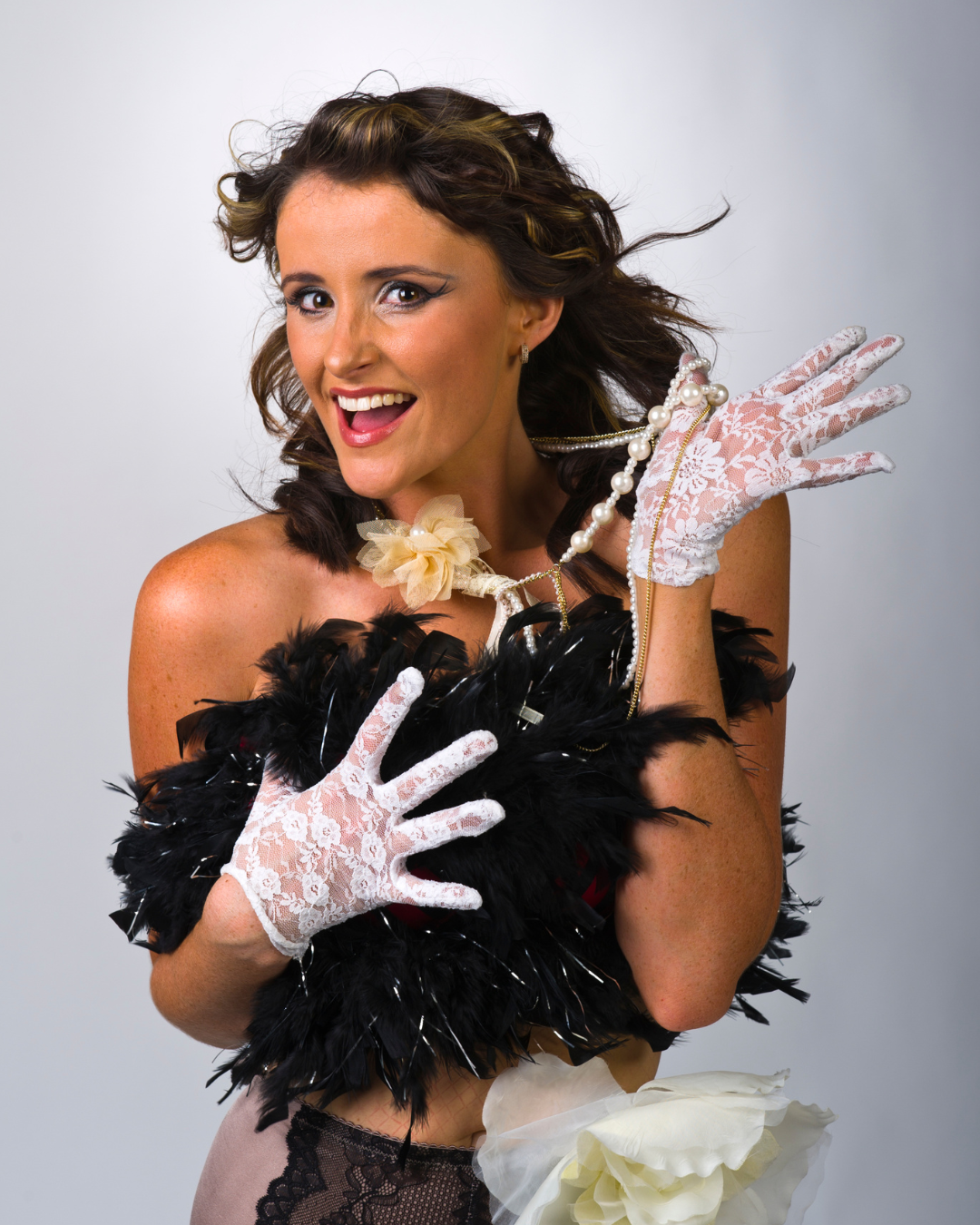
Because it's boring, mainly. The Muse Collector's pictures are all the same picture. Same angle, same damp hair, and a different girl's name in the caption. He (yeah, I can’t be gender neutral at this point) isn't looking at her at all. He's looking at a fantasy he had in 1994 and casting a new teenager in it every Tuesday.
And because it's a lie we've all been living inside. As a 48 year old trying to say “you're 18 and being photographed from above? Handcuffed to a car in not too sluty ann summers?” The gaze moves on. And I look like the jealous old woman because I’m not being handcuffed to a car. Somewhere in your forties it just stops looking, and plenty of women I know describe walking into a room and feeling like a coat stand. If being looked at was the prize, then we've all been made redundant, and I refuse to accept that. (But also, kinda glad, the freedom is beautiful)
I'll be honest, it took me years to unpick it in my own work. When I started out I asked women to pop a hip and tilt their chin down like everyone else, because that's what a “good” portrait looked like. It was only after watching woman after woman go stiff in front of my lens that I worked out what was wrong. They were posing for him, the man in their heads, and I was helping.
let me just say that again. I was helping.
Now I talk to them. I shoot at eye level and let them move. I wait for the bit where they forget about the camera, because twenty years behind it has taught me people can smell a pose a mile off, and they lean in the second you stop.
The best portrait I can make of a woman is one she'd hang in her own house. Whether the Muse Collector would like it doesn't come into it, and if he hates it, frankly, all the better. Because his work is so friggin uncool, and I can’t wait for all 18 years, 25 year olds to 80 year olds know this too.