Getty Images emailed me today to tell me it's going bankrupt, and that I'm not to worry about it.
It's the corporate version of a man ringing to say he's moving back in with his mum, but the relationship is absolutely fine. Business as usual, they said. Keep uploading, the royalties will keep coming, nothing to see here.
I've spent more than two decades in this industry, and for most of them Getty has been its grand dame: the archive, the gallery on Eastcastle Street, the photo of every red carpet you've ever seen. So I couldn't help but wonder…
When everyone has millions of images at their fingertips, what's a stock photo actually worth? And is uploading to stock libraries still worth a photographer's time?
What actually happened
On 12 October, Getty announced that the Getty family and Koch Equity Development would put in up to $533 million to take the company private, through something called a prepackaged Chapter 11. Prepackaged means the big creditors agreed the plan before anyone set foot in court, which is why everyone's talking in weeks rather than years. The agreement set today, 21 October, as the deadline for proceedings to begin.
The numbers read like a very messy divorce. At the end of June, Getty was carrying about $2.1 billion of debt. On the Friday before the announcement, the stock market valued the entire company at $20.74 million. It owed roughly a hundred times what it was worth.
It used the grace period on interest payments due in September, and both Moody's and S&P downgraded it into junk territory. Anyone still holding Getty shares gets nothing.
Most of this is about debt. Getty and Shutterstock had planned a $3.7 billion merger and abandoned it in June, after a UK regulator set conditions. Pile on the legal bills and a stock image business being chewed up by AI, and you've got your Chapter 11.
To be fair to Getty, Chapter 11 is a restructure, so the lights stay on. This is a business that brought in about $981 million in 2025 and paid out more than $220 million in royalties. Its library holds over 645 million images and videos. That's a lot of photos to own while you're asking your family for a loan.
Nobody I know buys stock photos any more
I make websites and social content for businesses for a living, and I honestly can't remember the last time I went to a stock site and paid for a photo. Canva has a library built in. So does Squarespace, and so does CapCut, and most of it comes with subscriptions people are already paying for.
Meet the Canva Queen. She runs a salon in Hoole, does her own socials on a Sunday night with a glass of red, and has never once in her life typed gettyimages.com into a browser. She doesn't want a photograph. She wants Thursday's post done before the kids need feeding, and whatever picture gets her there fastest, inside the app she's already got open, wins.
Before anyone emails me: yes, those bundled images still come with licences and small print. But the buying has moved somewhere else, and Getty was still standing in the old shop.
Then AI turned up
If Canva changed where people get their pictures, AI is asking whether a lot of those pictures need to exist at all.
A coffee cup on a wooden desk. A woman in a blazer laughing at a salad. Type it in and you've got one in seconds, and nobody had to hire a model or buy a salad.
There are still big, unresolved questions about copyright and consent, and AI is a messy stand-in for a real photographer. For the generic stuff, though, it's competition, and it's cheap.
Which leaves photographers with an awkward question to answer. If an image is easy to find, easy to swap and easy to generate, what exactly are we charging for? The kit? The hours we spent on it? I think we all know the answer was never either of those.
The bit of Getty that's still growing
Buried in Getty's own numbers is the most interesting thing about the whole mess.
According to its 2025 annual report, about 75% of its revenue came from exclusive content. Its editorial business, the news, sport, entertainment and archive pictures, grew 6.9% that year, while the creative side, the stock-style stuff, crept up 0.7%. In the second quarter of this year, editorial kept growing and creative went backwards. Getty's investor presentation this month told the same story, with demand softening at iStock while editorial carried on growing. Video's doing nicely too: 39 million clips by the end of June, up 11.7% on the year.
You can't generate George Clooney on the red carpet in Venice last month. Well, you can, but it would be a lie. A photograph of something that actually happened is worth money precisely because it happened. Same goes for an archive shot of a street that's long gone, or a brand shoot of the actual woman who actually runs the business. The weeping mother of the bride, God love her, can't be prompted into existence.
My money says the value in photography follows whatever can't be faked, and drains out of everything that can.
Less than a dollar a pop
Getty's own contributor information puts royalties at somewhere between 15% and 45%, depending on your deal, and admits that a single licence can sell for less than a dollar.
Meet the Stock Hopeful. She's read a blog about passive income. She plans a shoot, buys props from B&M, styles a flat lay of a laptop and a succulent, edits it, keywords it, uploads it and waits. It might sell for years. It might sell once, in 2028, for 38 cents. It might sit there forever, like the treadmill in the spare room.
If you've already got a big, commercially sharp portfolio and years of sales behind you, I can see it still adding up. Starting from scratch today, I'd want some very convincing numbers before I gave it hundreds of hours, because that flat lay is up against a library of 645 million images and whatever somebody can generate before the kettle's boiled.
So is Getty finished?
I doubt it. It still has archives nobody else has, the licensing machinery, decades of relationships and a news business that's growing, and businesses spent close to a billion dollars with it last year. The restructure is about a company that borrowed far too much. The technology is a separate problem, nibbling away at one half of what it sells. The two are related, and they're also different.
To me, Getty going bust looks like an old business that spent decades selling access to pictures, in a world that now has pictures coming out of its ears.
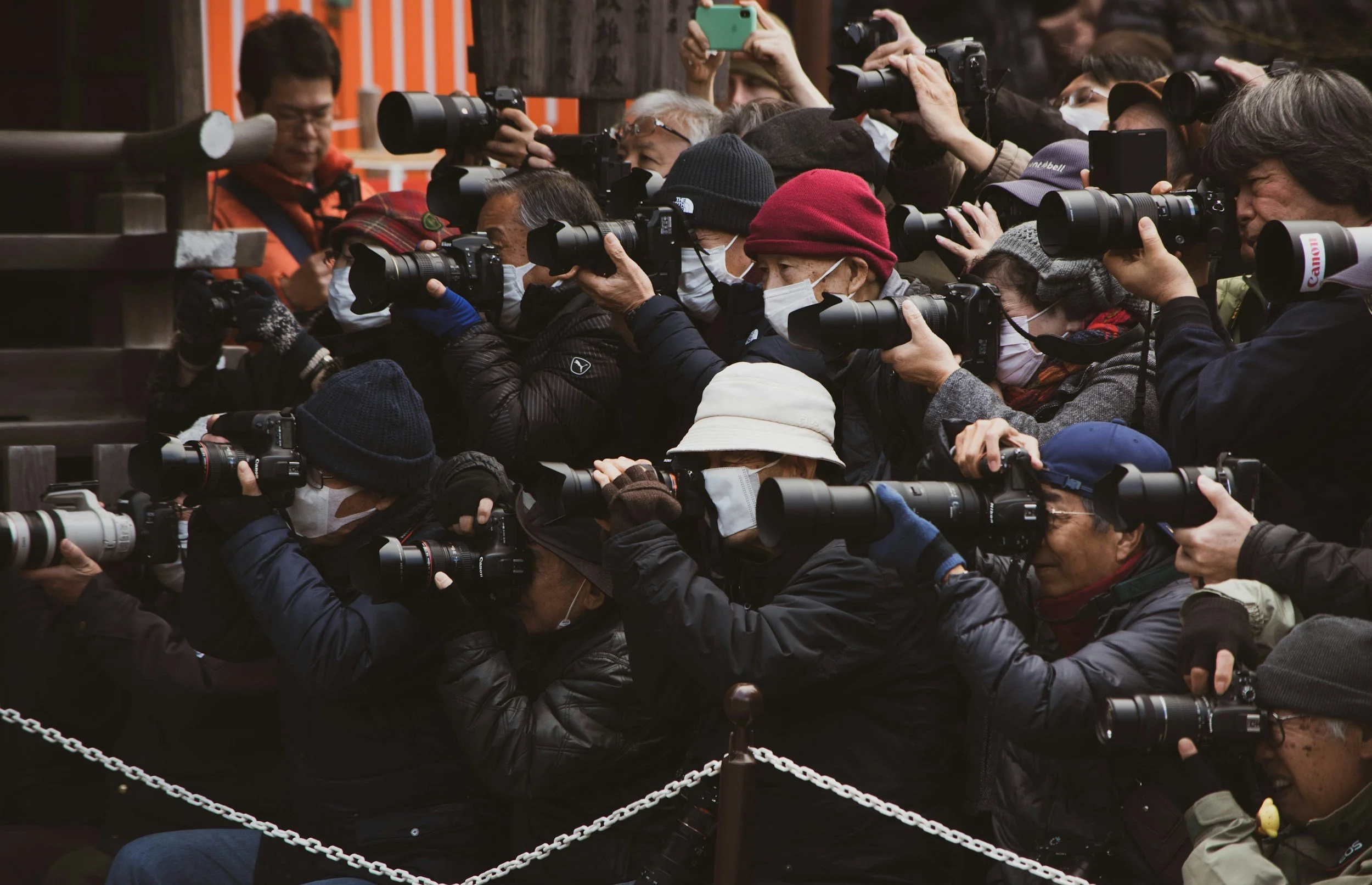
I've watched this industry go from film to digital, through Weekend Canon Man and the iPhone and Instagram, and now this. Every time the kit changed, the people who were good at noticing things kept working, and the people selling generic stuff in bulk had a much harder time of it.
For years, photographers got paid because businesses needed images. Now businesses have more images than they know what to do with, and the ones they'll still pay for are the ones that couldn't have come from anywhere else.
Which suits me fine, frankly. I never wanted to be a laptop and a succulent anyway.